- For adult patients
- For parents and caregivers
Oral irrigators and water flossers
Water flossers, dental showers and oral irrigators describe the same category. We explain their role, upkeep and limits.
Created Updated
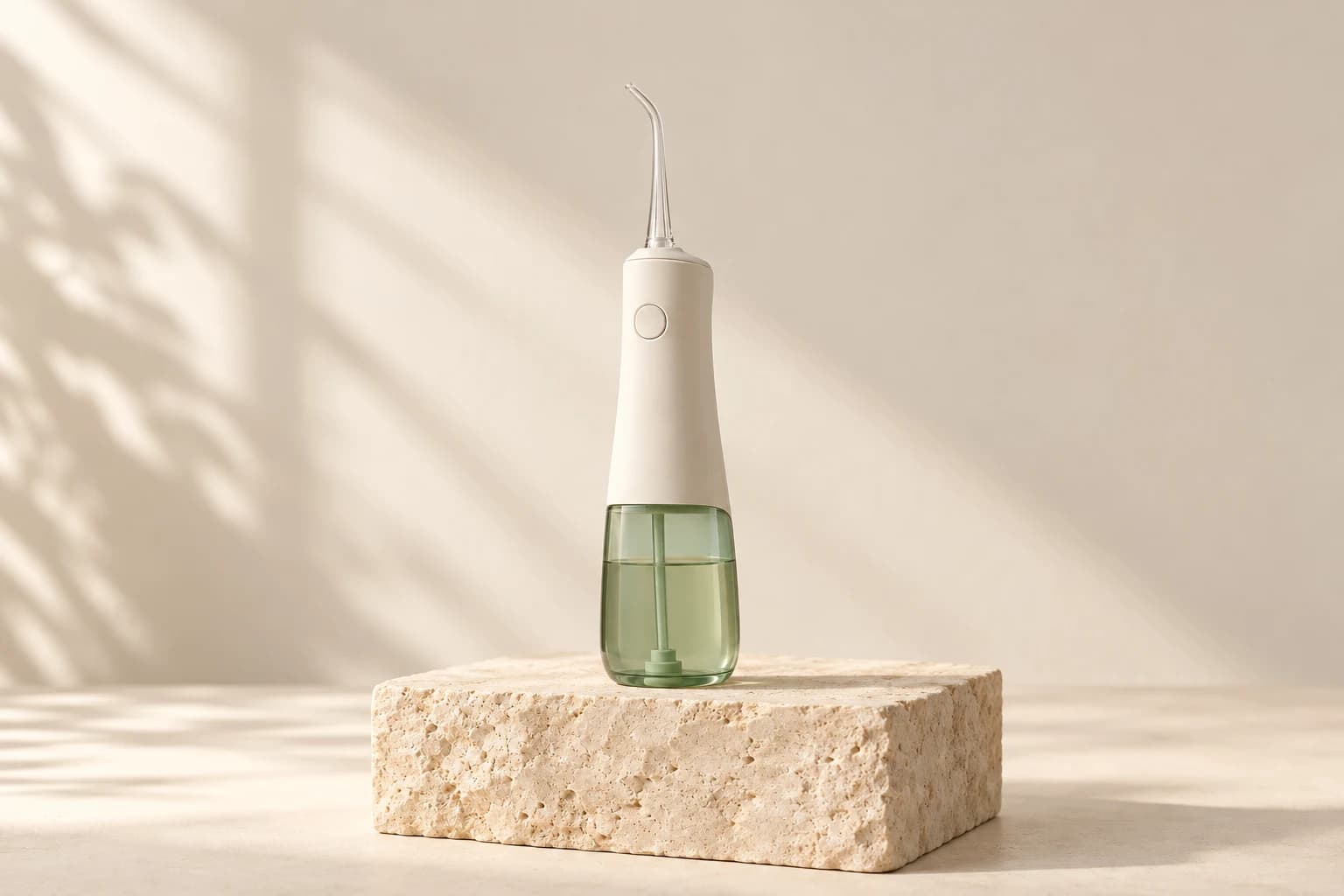
An oral irrigator directs a stream of water around teeth and between them. It may offer a more manageable way to carry out part of interdental care, but it does not make brushing or an individual cleaning plan unnecessary.
Where the water jet fits
The stream helps clear debris and can support cleaning around areas that are difficult to reach. Evidence for oral irrigators concerns particular outcomes, such as gum inflammation, and depends on the device and study. A claim about healthier gums should not be read as proof that a device prevents every cavity or treats established disease.
If floss is difficult to handle, an irrigator is one option to discuss alongside interdental brushes and other aids. Ask which surfaces still need a different cleaning method, especially around braces, bridges or implants.
Countertop or cordless
A countertop unit usually separates the reservoir from the handpiece. A cordless unit combines more of the equipment in the handle. Compare the space available near the sink, the weight when filled, filling access and how comfortably you can reach the controls.
Reservoir capacity affects refilling, while battery and charging arrangements affect travel. Neither format establishes clinical superiority. Check which tips are included, what replacements cost and whether they are available for that exact model.
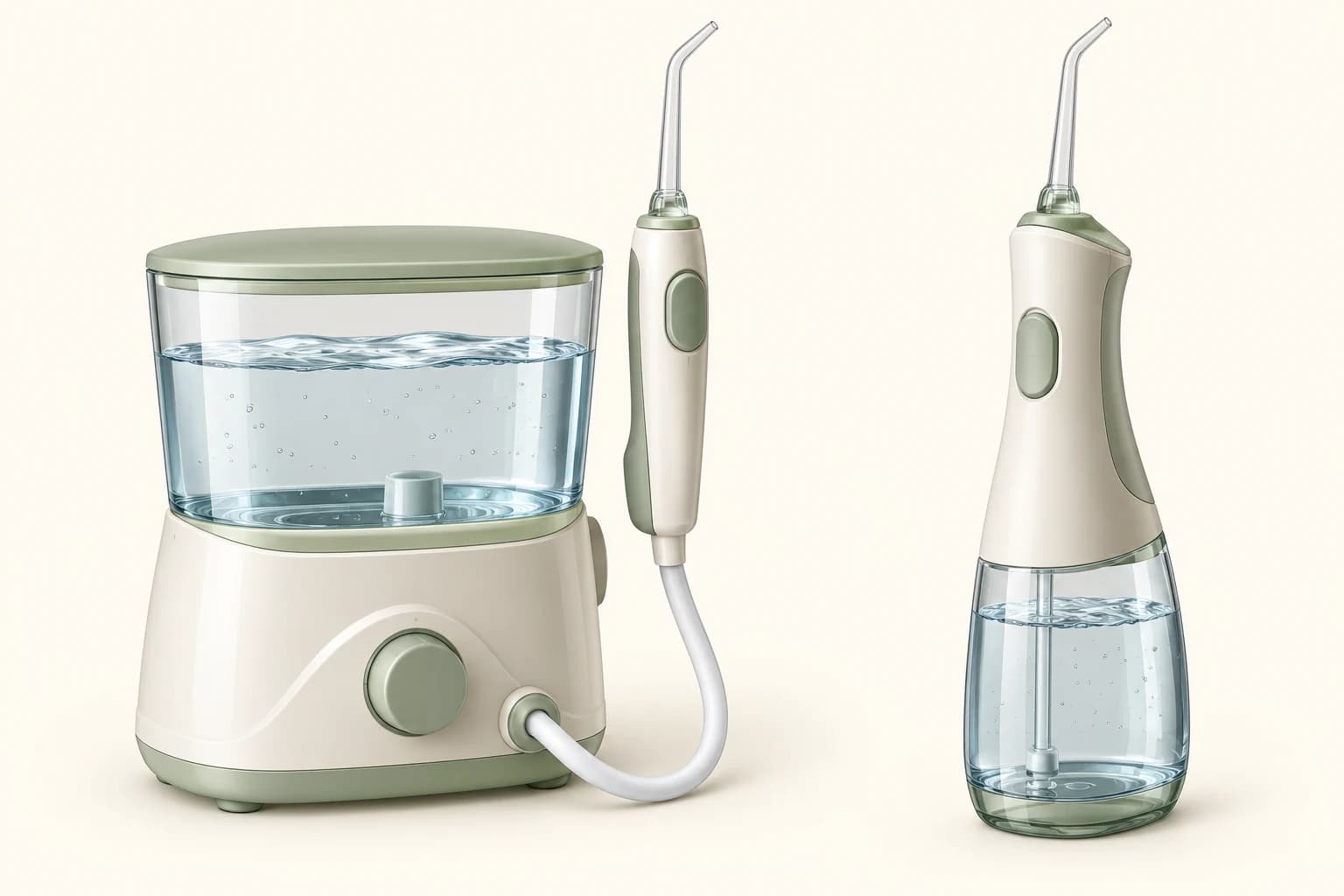
With the countertop unit on the left, you hold the slim handpiece while the water stays in the separate reservoir. With the cordless unit on the right, you hold the reservoir too. Check whether the device feels comfortable when filled. Shapes and sizes vary by model.
Settings and cleaning are device-specific
Read the instructions before use and ask for a demonstration if you have dental work or sensitive areas. Use the recommended starting setting and tip for the device; maximum pressure is not a universal target. Do not copy a setting from a different person's video as though it were a personal recommendation.
Follow the manufacturer's rules for filling, emptying, drying and cleaning the reservoir and tips. Use only liquids the device allows. Refill access, storage and maintenance are everyday parts of the purchase, so choose a setup you can realistically look after.
Benefits and limitations
Potential benefits
- May be easier to handle for people who struggle with string floss.
- Offers another option to discuss for difficult access around dental work.
- Different formats suit different sink space and travel needs.
Limits to consider
- Needs water, cleaning and storage, as well as power or charging.
- May splash and takes practice to control.
- Does not replace brushing or professional assessment of gum problems.
What to check before choosing
- Try to assess the grip, weight when filled and access to controls.
- Check reservoir size, charging and the space available near your sink.
- Verify compatible tips and their replacement cost.
- Ask which role the device would have in your particular cleaning routine.
Common questions and misconceptions
These names usually refer to the same category of water-jet device. Compare the actual mechanism and instructions rather than treating each name as a separate essential purchase.
No. An irrigator belongs within a wider care routine. The ADA's home-care guidance includes brushing with fluoride toothpaste as well as cleaning between teeth.
Check the exact device's instructions. Compatibility and cleaning requirements vary; a liquid intended for the mouth is not automatically suitable for the equipment.
Children and caregivers
Do not assume an adult irrigator is suitable for a child. Check the model's age guidance and ask the dental team about supervision, handling and any orthodontic attachments. A child's cleaning plan may need simpler tools.
Sources
- Dental floss and interdental cleaners American Dental Association · EN
- Home oral care American Dental Association · EN
- Caring for teeth and gums Oral Health Foundation · EN