- For adult patients
- For parents and caregivers
Dental floss: how to choose it and use it correctly
Choose between round floss and flat tape, clean both sides of each gap, and use a water flosser before brushing with fluoride toothpaste.
Created Updated
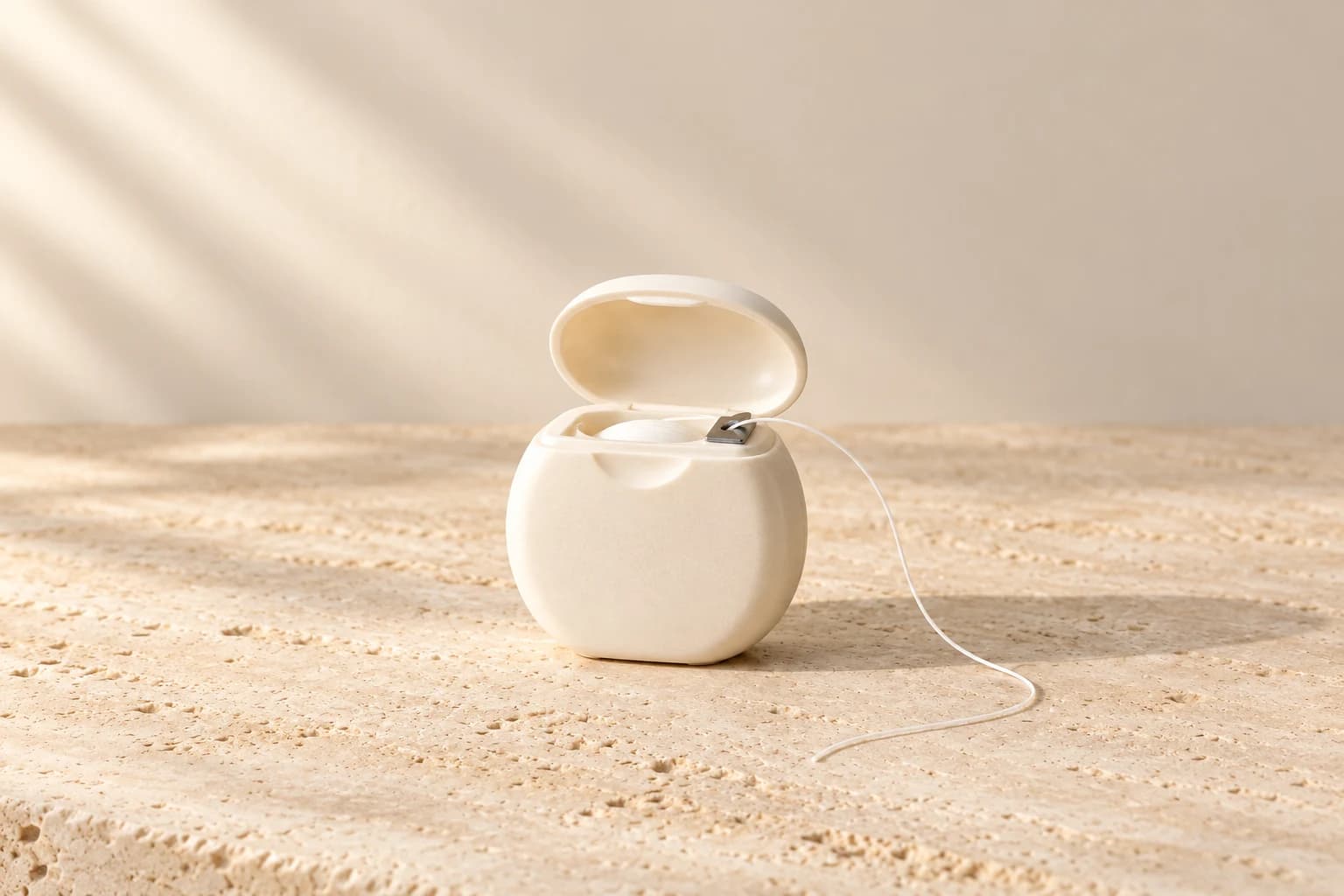
Clean between your teeth once a day. Floss removes plaque from the facing tooth surfaces that a toothbrush cannot reach. To clean them, wrap the floss around each tooth in turn and move it along the surface.
Why we suggest starting with flat tape
Floss comes in two main shapes: a round strand and a flat ribbon. We recommend starting with thin flat floss, also called dental tape. Choose one that passes between your teeth without force.
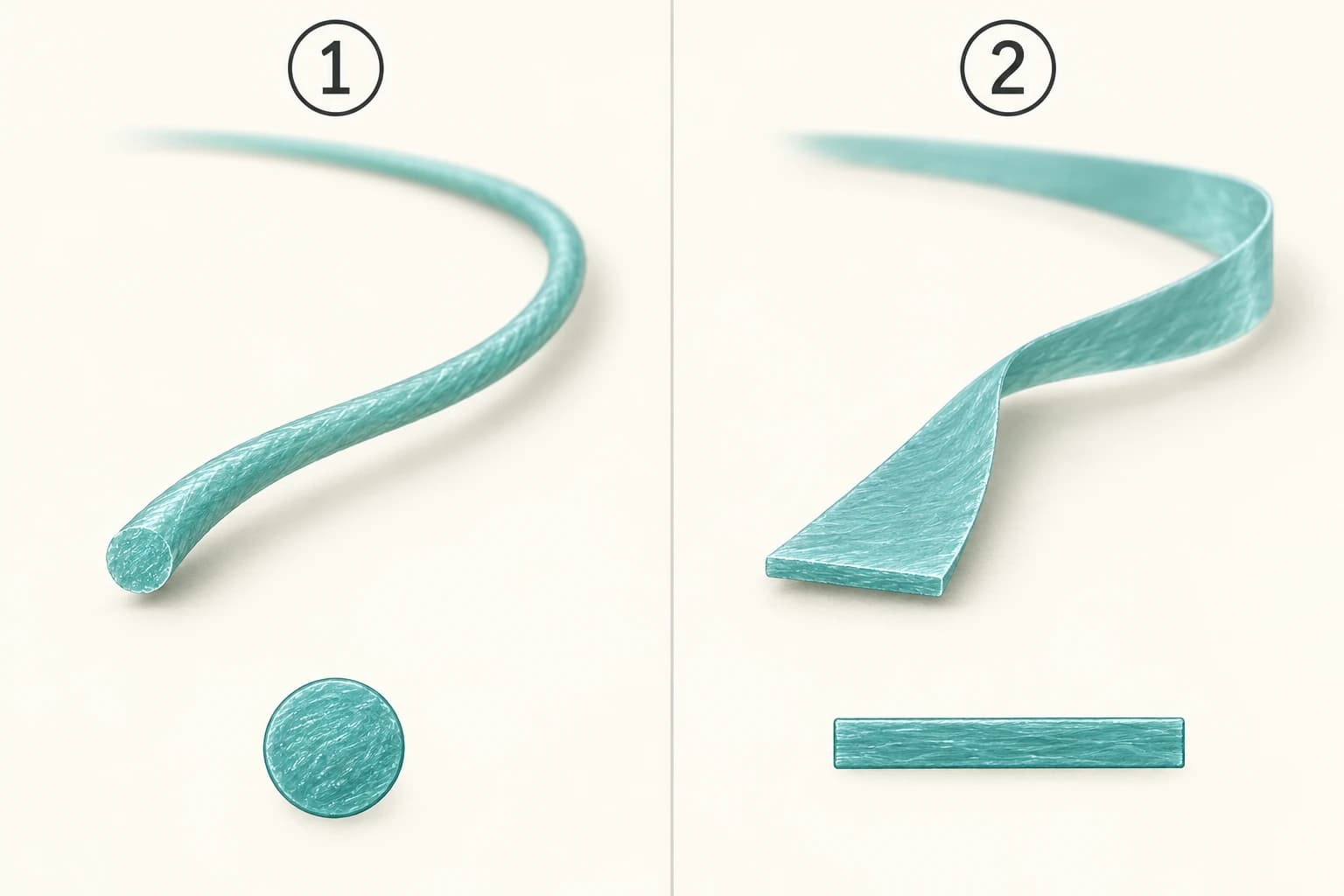
1: round floss. 2: flat dental tape. The enlarged sections show the difference in shape.
We favour flat tape for comfort: its wider surface may feel more comfortable as it wraps around the tooth. For closely touching teeth, look for a thin, smooth tape, such as PTFE. How easily it slides depends on the material, coating and thickness, as well as the shape.
“Waxed” means the floss has a coating that helps it slide. Both round floss and flat tape can be waxed. To clean well, wrap the floss around each tooth and move it along the surface, as shown in the steps below.
Dental floss and interdental cleaners · Floss shapes (manufacturer information)
How to floss in five steps
- Cut off 30–45 cm of floss. Wrap the ends around your middle fingers, leaving 3–4 cm taut between your hands.
- Guide it with your thumbs and forefingers. Ease it through the contact without snapping it into the gum.
- Curve it into a C against one tooth. Slide gently to the gumline and slightly beneath it, without forcing it.
- Move up and down against the tooth. Then wrap the floss around the neighbouring tooth and clean its side in the same gap.
- Move to the next gap with a clean section of floss. Include the back surface of the last tooth on each side.
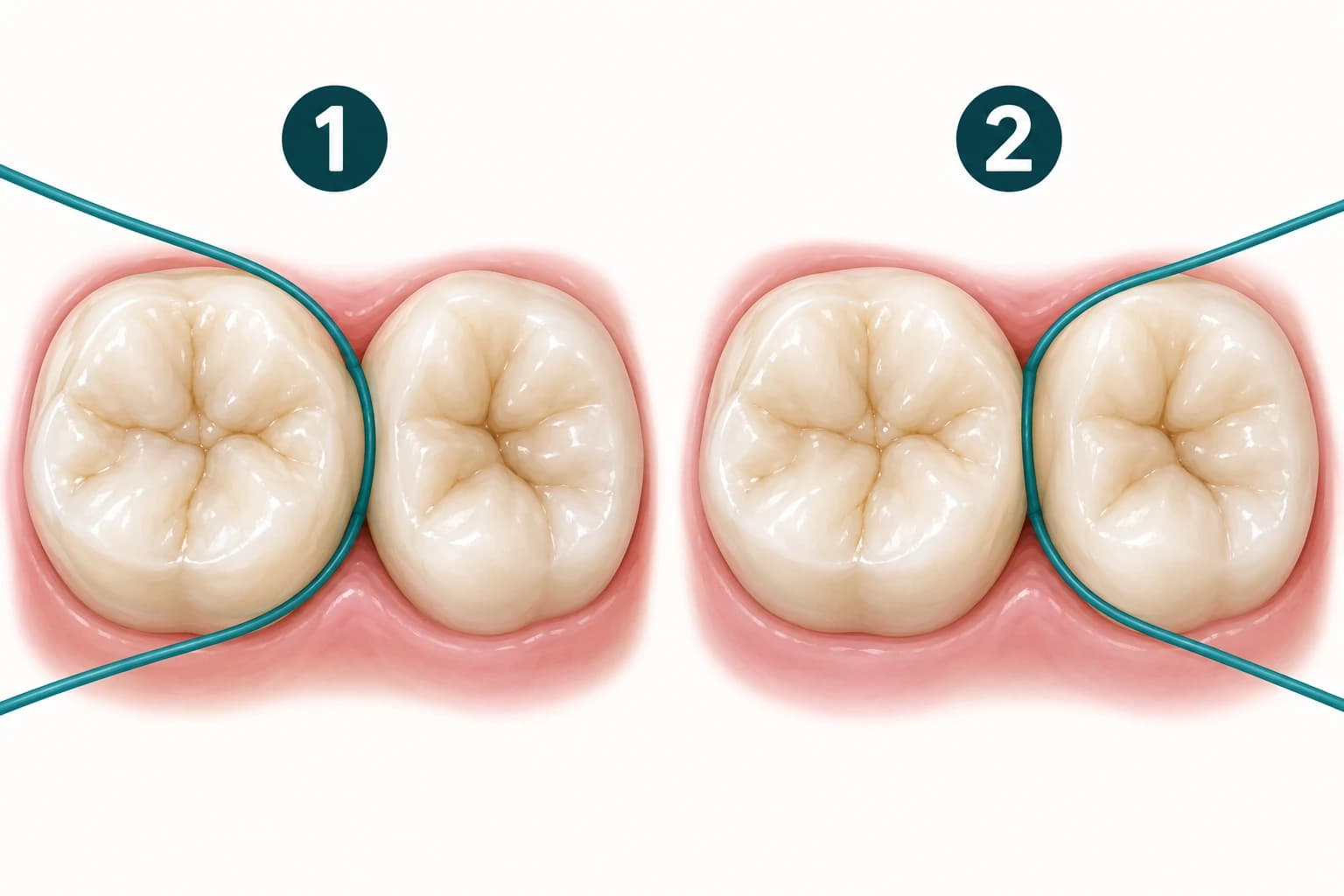
The same gap viewed from above. In panel 1, the floss hugs one tooth; in panel 2, it hugs its neighbour. Move up and down along each surface.
Passing the floss straight through the middle of a gap once is not enough. It needs to touch each of the two tooth surfaces.
How to keep your teeth clean · Flossing technique and children’s care
What to use at the front and back of your mouth
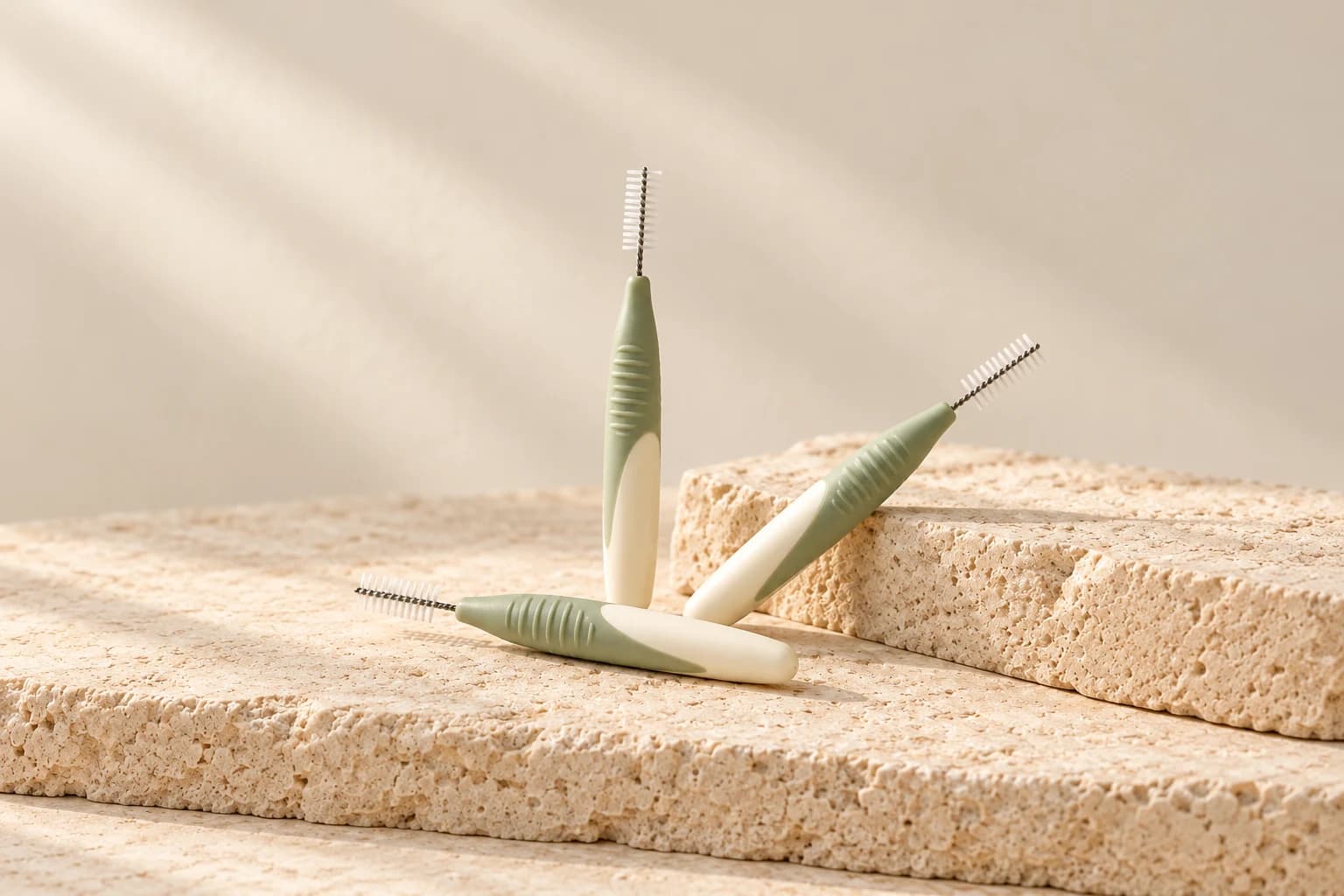
Use floss at tight contacts, whether between incisors or molars. In a more open space, use a correctly sized interdental brush: its bristles should touch the teeth and it should pass without force. If reaching the back teeth with string is difficult, ask about a holder or water flosser.
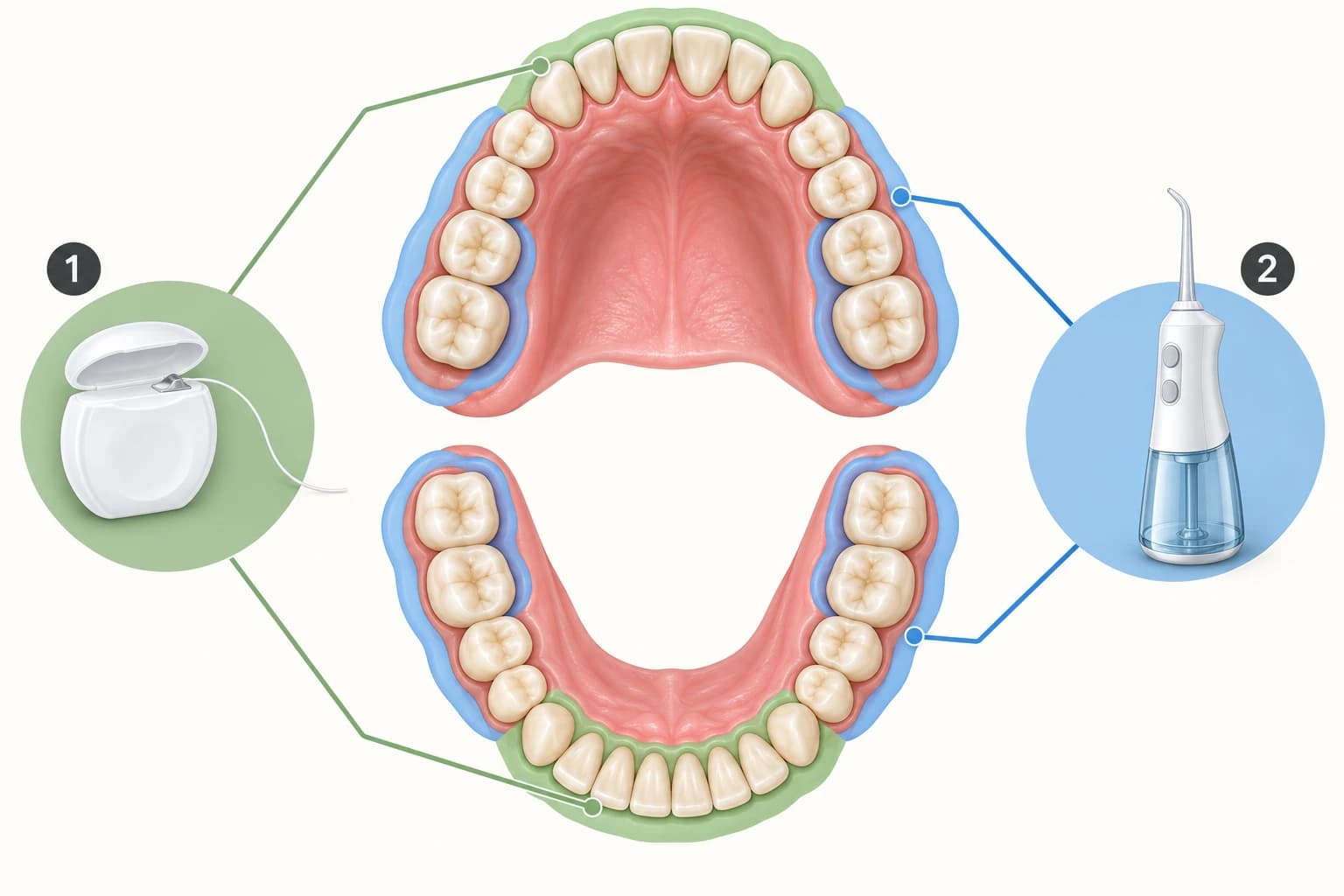
One possible combination: green, floss between front teeth; blue, a water flosser at the back. Choose by space and access: floss also works between molars, and a water flosser can be used at the front.
Dental floss and interdental cleaners · Water flossers: uses and evidence · Caring for teeth and gums
What a water flosser does
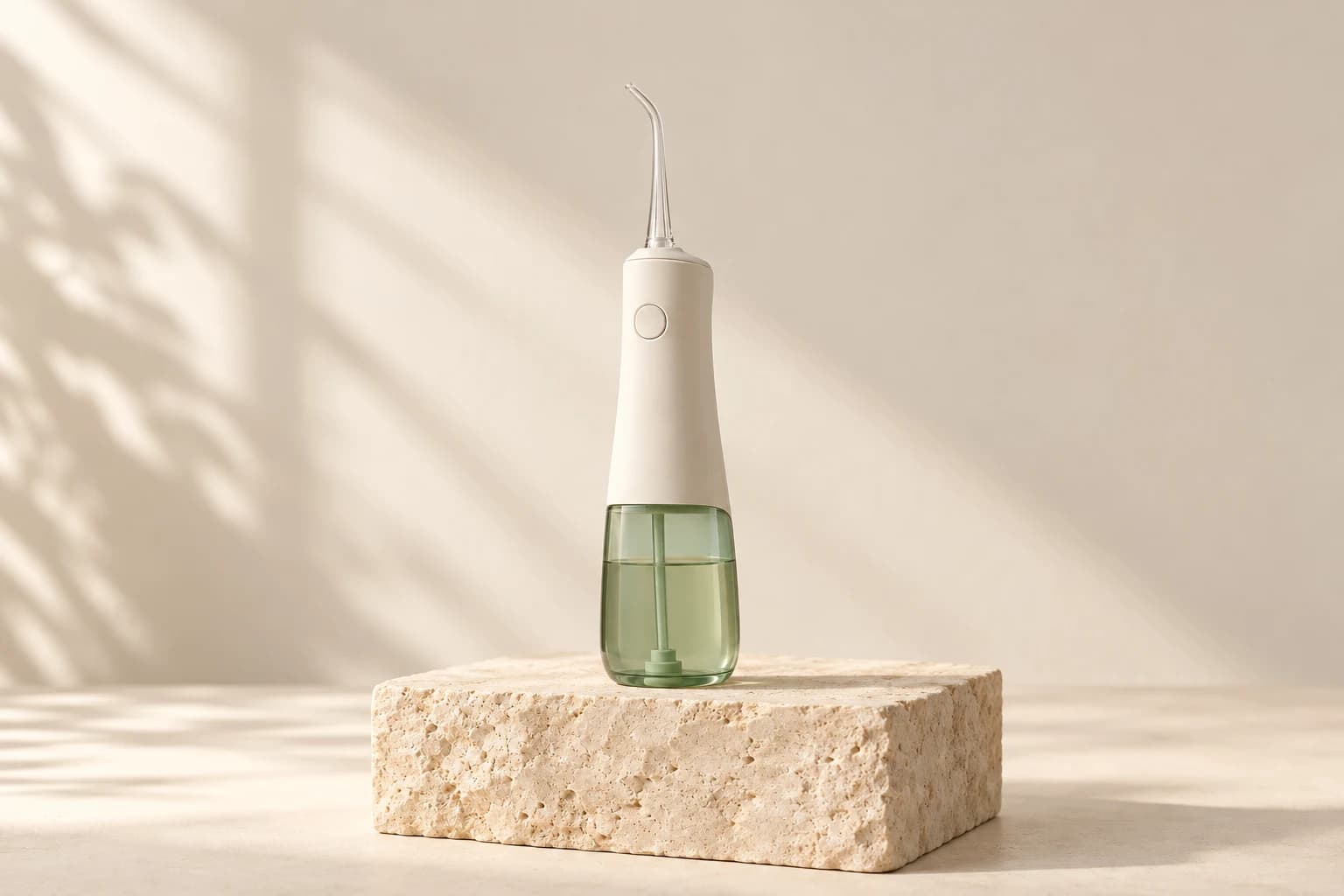
A water flosser, also called an oral irrigator or dental shower, directs water between teeth and along the gumline. It is an option when gripping floss is difficult or access around braces and fixed bridges is awkward. It does not replace brushing with fluoride toothpaste.
Use the tip and starting pressure specified for your model. For implants, bridges or braces, ask for a demonstration of how to clean around them. Read about irrigator settings and maintenance.
Clean between teeth, then brush with toothpaste
For evening care, you can follow this order:
- Clean between teeth with floss or interdental brushes that fit the spaces.
- If you also use a water flosser, do that before brushing.
- Brush with fluoride toothpaste for about two minutes. Spit out the excess without rinsing straight afterwards.
Water after brushing washes away concentrated fluoride from the remaining toothpaste. That is why we suggest using the water flosser before brushing. Brush twice a day, including last thing before bed.
What the research shows
Cochrane's 2019 review found that adding floss to brushing may reduce gingivitis, or gum inflammation. The evidence was of low to very low certainty, and results for plaque were inconsistent. The included trials did not assess prevention of tooth decay.
The American Dental Association (ADA) recommends cleaning between teeth once a day with a suitable tool. That does not establish one floss shape or brand as best for everyone.
Cochrane: interdental cleaning evidence (2019) · Dental floss and interdental cleaners
What to check before buying
- Floss should pass without hard pulling and curve around the side of the tooth.
- With a holder, check that you can reach the last teeth and clean both sides of each contact.
- For a water flosser, check its weight with a full reservoir, adjustable pressure and availability of replacement tips.
Examples of floss, tape and a water flosser
These links open manufacturers' product descriptions. We have not carried out comparative tests of these products.
- Curaprox DF 820, 35 m: PTFE dental tape, in the manufacturer's Bulgarian shop.
- Curaprox waxed floss, 50 m: coated floss, in the same shop.
- Waterpik Cordless Advanced 2.0, WP-580: a cordless water flosser. This English page describes the US version; check the local model, charger and tips before buying.
Bleeding, catching and reusing floss
Continue cleaning gently without pressing harder. If bleeding does not settle within a few days, see a dentist. Pain during cleaning also needs a check of your technique and gum health.
Caring for teeth and gums · Flossing technique and children’s care
Do not force it. If this keeps happening, ask a dentist to check the spot and show you how to clean it.
No. Discard used floss. It may be frayed and can put removed deposits back onto the teeth.
When children need flossing
Start cleaning between a child's teeth when two teeth touch. An adult does this at first. Ask the dentist to demonstrate, and help until the child can use the technique safely alone.
Sources
- Dental floss and interdental cleaners American Dental Association · EN
- Floss shapes (manufacturer information) Oral-B · EN
- How to keep your teeth clean NHS · EN
- Flossing technique and children’s care American Dental Association · EN
- Water flossers: uses and evidence American Dental Association · EN
- Caring for teeth and gums Oral Health Foundation · EN
- Cochrane: interdental cleaning evidence (2019) Cochrane · EN