- For adult patients
- For parents and caregivers
Plaque disclosing products
Tablets and solutions make plaque easier to see. We explain how to use that feedback without mistaking colour for a diagnosis.
Created Updated

Plaque is not always easy to spot in a mirror. Disclosing products colour it so that missed areas are easier to notice. Their purpose is feedback: they help you look at your cleaning technique, while the cleaning itself still needs to be done.
Look for a pattern, not a score
A disclosing product can reveal areas that are easy to miss, such as parts of the back teeth or surfaces near the gumline. Use the observation to identify a specific place to pay attention to. A dental professional can help connect what you see with a practical change in technique.
A coloured area is not a diagnosis of decay or gum disease, and a clear-looking result is not an all-clear examination. These products answer a narrower question about visible disclosed plaque at that moment.
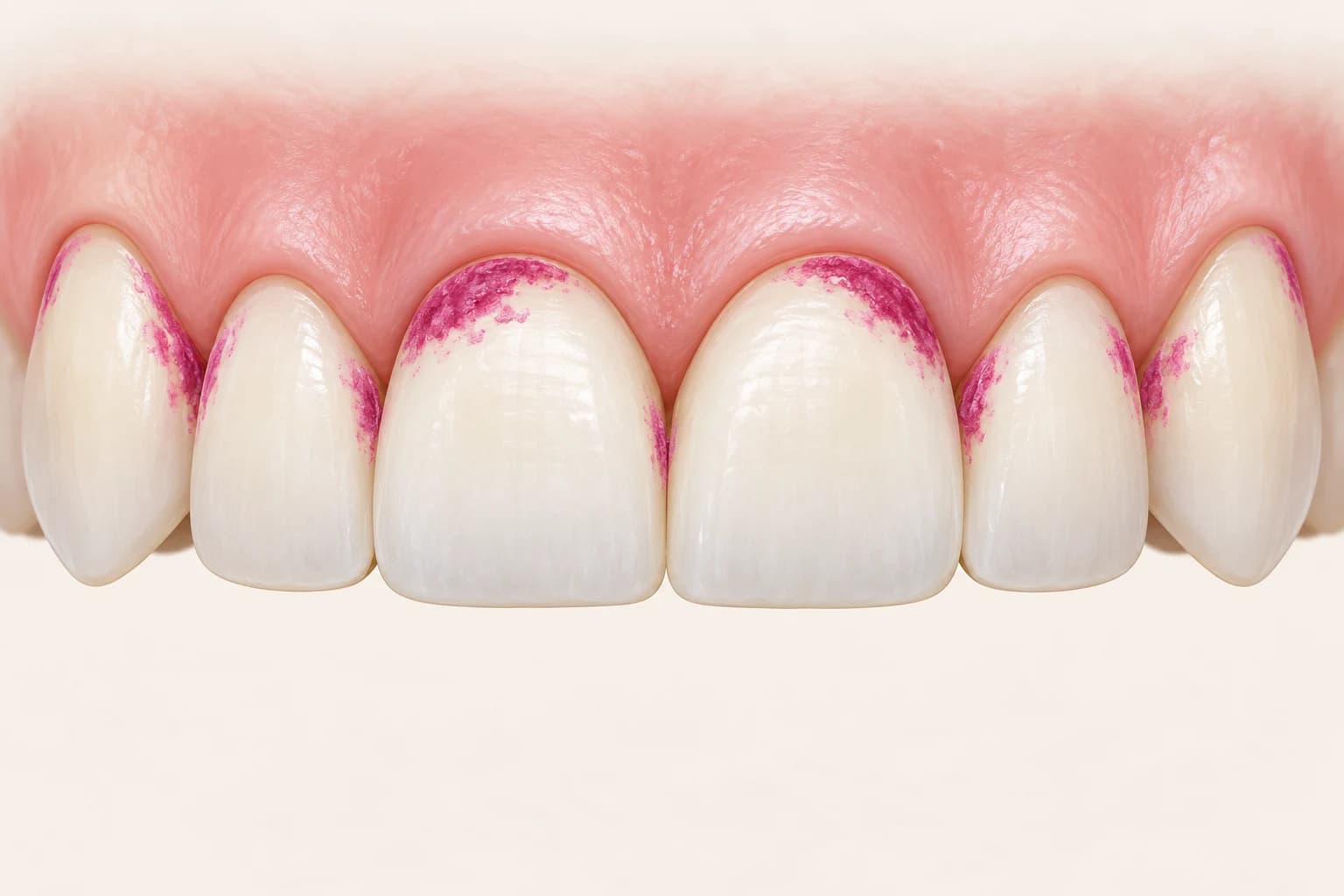
The dark pink patches in the illustration show plaque left near the gumline and between the teeth. The colour depends on the product.
Follow the instructions for the format
Tablets and liquids are used differently. Read the packet, including ingredient and age guidance, before starting. Some products can stain lips, clothing or surfaces temporarily, so prepare the area and avoid rushing. Do not treat a disclosing tablet as a sweet or swallow it.
The Leeds patient leaflet describes spreading the colour, spitting out the excess and inspecting the teeth in a mirror before cleaning the disclosed areas. Follow the timing and quantities for your own product rather than transferring those details from a different format.
Check what the colours actually mean
Products may use different dyes and colour schemes. Read the explanation for the exact product before interpreting a colour as older or newer plaque. The appearance alone does not tell you which product was used or whether a dental problem is present.
For useful feedback, choose an area to discuss at your next appointment and ask for a demonstration of how to reach it. Repeatedly scrubbing harder to chase every trace of colour is not a substitute for checking the technique and the product instructions.
Benefits and limitations
Potential benefits
- Makes missed areas easier to notice in a mirror.
- Gives a concrete starting point for a brushing demonstration.
- Can support a conversation about technique without needing an app.
Limits to consider
- Colour is feedback, not a diagnosis or a guarantee of oral health.
- Dyes may stain temporarily and ingredients need checking.
- The result depends on correct use and interpretation of the product.
What to check before choosing
- Choose a format you can use according to its instructions.
- Check ingredients, age guidance and swallowing precautions.
- Read the manufacturer's explanation of the colour scheme.
- Plan to discuss persistent missed areas with your dental team.
Common questions and misconceptions
It makes plaque visible. You still need to clean the areas with the appropriate brushing or interdental method.
No universal interpretation should be assumed. Check the explanation supplied with the exact product.
Adults can also use visual feedback to discuss cleaning technique. Suitability depends on the product instructions and the person's ability to use it safely.
Children and caregivers
Use this as a calm caregiver-led activity only when the product is appropriate and the child can follow the instructions safely. Store tablets out of reach and explain that they are not sweets. Discuss what can be reached more easily, rather than labelling a child or their mouth as dirty.
Sources
- Using disclosing tablets Leeds Teaching Hospitals NHS Trust · EN
- Caring for teeth and gums Oral Health Foundation · EN