New permanent teeth in the school years
Recognise the first permanent molars, adapt brushing during tooth changes and know when sensitivity or an injury needs attention.
Created
Two sets of teeth share the mouth
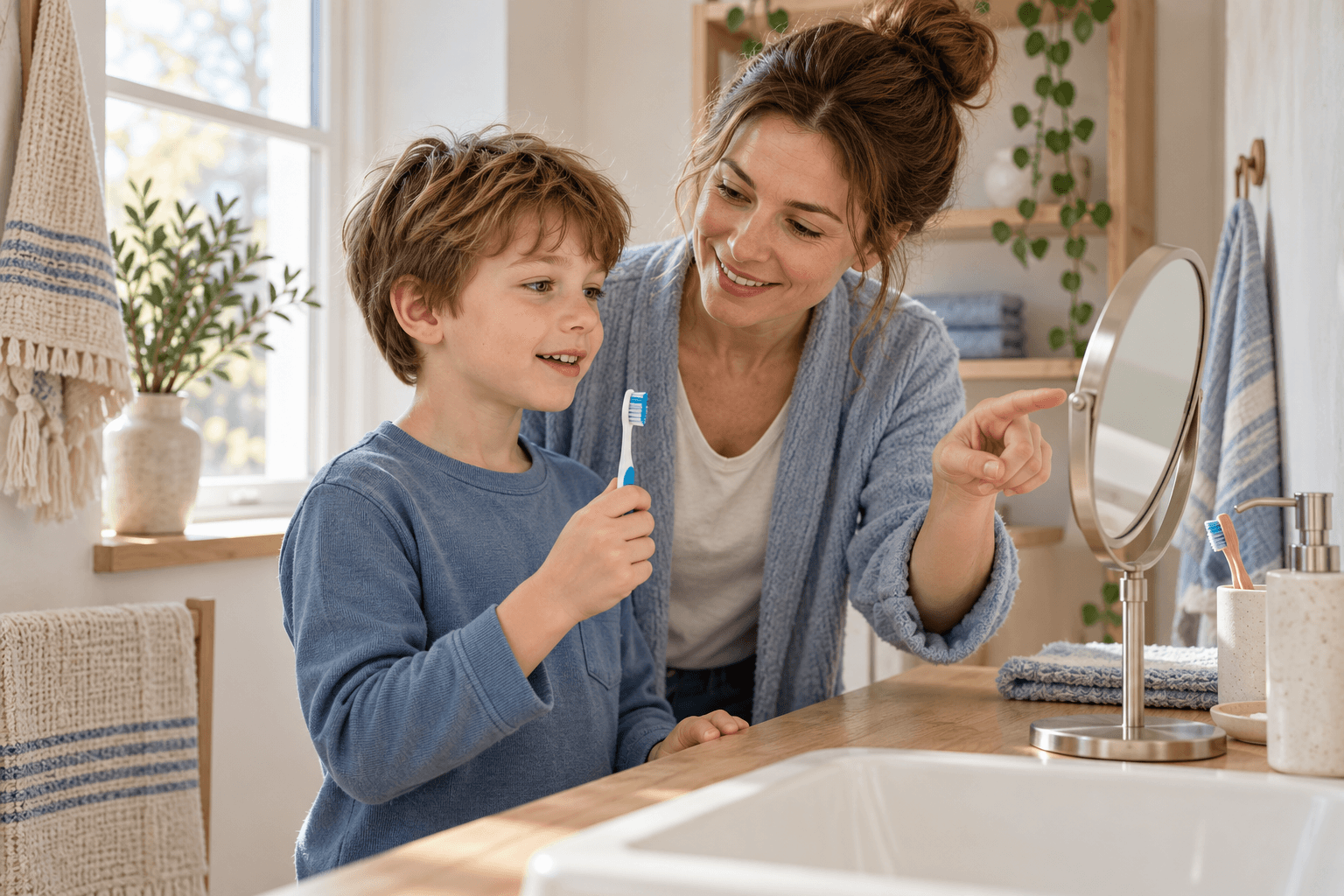
Around the start of school, permanent teeth begin appearing among milk teeth. The first permanent molars usually arrive behind the last milk molars at roughly six to seven years. No milk tooth has to fall out to make room for them, which makes them easy to overlook. They need care from the moment their chewing surfaces appear.
An eruption chart shows a usual sequence, not a deadline for every child. Some overlap and uneven-looking stages are part of the transition, but a dentist should assess pain, a tooth that seems blocked or a development concern. Do not try to move a tooth or pull a firm milk tooth at home because a chart suggests it should already be gone.
A practical weekly check is to look together in good light and notice what has changed at the back. This helps you aim the brush; it is not a home diagnostic examination. At the next visit, ask the dentist to point out which teeth are permanent so the child and every caregiver recognise them.
Sources: Tooth eruption charts · Care for ages 2–12
New molars need deliberate brushing
A partly erupted molar sits below its neighbours. A brush moving straight across the row can pass over it. Try approaching its chewing surface from the side with a small brush head, and ask the dental team to demonstrate the angle in your child's mouth. Avoid pushing hard on the gum over an erupting tooth.
Continue brushing twice daily and helping until your child can reliably reach all surfaces. The EAPD supports adult help or supervision until at least seven; many children need practical help longer. Check ability rather than declaring independence on a birthday. A child can start the routine and an adult can finish the difficult areas.
Our shared fluoride guide uses the EAPD age reference: 1000 ppm and a pea-sized amount through age six, with 1450 ppm above six. Individual risk can change the dentist's recommendation. Confirm the transition with the dental team, especially if the child swallows paste or already has decay. Spit after brushing without rinsing away the fluoride.
How to brush children's teeth, step by step
Sources: Brushing technique and adult help · European fluoride guidance
Sealants and varnish serve different purposes
Deep grooves on a permanent molar can be difficult to clean. A sealant covers selected pits and fissures after the dentist has checked the tooth. Fluoride varnish is applied more broadly to support prevention. A child may benefit from one, both or a different plan, depending on the tooth and their overall risk.
Sealants do not cover every surface and need checking over time. A sealed tooth still needs brushing and sensible eating patterns. Ask which molars are suitable now and whether a partly erupted tooth should be reassessed. The clinical decision and eligibility for a funded programme are separate questions; the sealant guide explains Bulgaria's programme context.
Dental sealants: which teeth, what happens and what to ask
Sources: Clinical sealant guideline · Sealants for families
A sensitive new tooth deserves a closer look
Some permanent molars or incisors develop with clearly bounded cream, yellow or brown areas and may be sensitive. One possible explanation is molar-incisor hypomineralisation, often shortened to MIH, but colour alone cannot identify it. Decay, staining and other enamel changes can also affect appearance. A dental examination is needed before deciding on care.
Tell the dentist if cold drinks, chewing or brushing hurts, or if a newly erupted tooth seems to chip. Avoid blaming the child for missing a painful area. Continue gentle cleaning as tolerated and arrange advice on controlling sensitivity and protecting the surface. A photograph may help you describe a change, but it cannot replace the examination.
Pain that wakes the child, facial swelling or fever with dental pain needs prompt assessment. Do not wait for a routine school holiday appointment just because the tooth is new. Early attention makes it easier to decide what protection or treatment is suitable.
Sources: Molar-incisor hypomineralisation · Dental abscess and urgent signs
Food, independence and shared responsibility
School introduces new routines, snacks and time away from home. Agree on a water bottle for ordinary thirst and a predictable snack pattern. A sweet drink sipped through lessons exposes teeth repeatedly; having it with a meal, if it is offered, changes that pattern. Whole fruit is different from juice, and food choices still need to suit allergies and nutritional needs.
Keep the brushing kit easy to reach and discuss what happens during sleepovers, trips or stays with another caregiver. A short factual handover works well: paste used, areas needing help and the dental contact. Independence can mean remembering the kit and starting the routine while an adult still checks the cleaning.
Food and drinks: making the daily pattern work for teeth
Sources: Sugars and dental caries · Care for ages 2–12
Protect teeth and prepare for an accident
For contact or collision sports, ask about a well-fitting mouthguard and review its fit as teeth change. It is intended to reduce dental injury; it is not a guarantee against every injury or concussion. A loose or uncomfortable guard is unlikely to be worn consistently, so raise problems with the dentist or coach.
Make sure adults supervising sport know where to find emergency dental help. A knocked-out milk tooth must not be put back. A knocked-out permanent tooth needs immediate action, and keeping it moist while obtaining urgent dental care matters. Because children in this age group have both types, read the injury guide before an accident rather than guessing from age alone.
A chipped or knocked-out tooth: what to do first
Sources: Sports mouthguards · First aid for a knocked-out tooth
Sources
- Tooth eruption charts American Dental Association · EN
- Care for ages 2–12 Dental Health Foundation · EN
- Brushing technique and adult help SDCEP · EN
- European fluoride guidance EAPD · EN
- Clinical sealant guideline AAPD / ADA · EN
- Sealants for families NIDCR · EN
- Molar-incisor hypomineralisation EAPD · EN
- Dental abscess and urgent signs NHS · EN
- Sugars and dental caries WHO · EN
- Sports mouthguards British Orthodontic Society · EN
- First aid for a knocked-out tooth NHS · EN