Food and drinks: making the daily pattern work for teeth
Understand sugar frequency, acidic drinks and cup habits, with realistic examples for home, nursery and school.
Created
Look at how often, as well as how much
A child who carries a sweet drink and sips it repeatedly has a different pattern of exposure from one who has the same drink with a meal. Bacteria in dental plaque use sugars to produce acids. Frequent exposures give teeth repeated challenges, while fluoride, saliva and effective cleaning support protection. Brushing matters, but it does not make the timing of food and drinks irrelevant.
Start by noticing an ordinary day without judging it. Include drinks in the car, snacks after nursery, medicine where relevant and the last drink before sleep. Look for one manageable change, such as water between meals or moving a sweet snack into a meal. A plan the household can repeat is more useful than a strict rule that collapses when everyone is tired.
Children still need enough food for growth. This guide is about oral-health habits, not weight loss, calorie restriction or a list of forbidden foods. If there is a prescribed diet, food allergy, feeding difficulty or concern about growth, agree changes with the child's health team.
Sources: Sugars and dental caries · Care for ages 2–12
Free sugars and misleading shortcuts
Free sugars include sugars added to food and drinks, as well as those in honey, syrups, fruit juices and concentrates. The sugars naturally enclosed in whole fruit are treated differently in dietary guidance. A smoothie or juice is therefore not equivalent to handing a child a piece of fruit, and “no added sugar” does not mean a drink contains no free sugars.
On a label, “of which sugars” shows total sugars, not just added sugars. Plain milk and unsweetened yoghurt can contain naturally occurring lactose; the number alone does not tell the whole nutritional story. Read the ingredients and consider the food, portion and eating pattern rather than classifying every product by a single line on the pack.
Honey and other syrups are not dental substitutes for sugar. Also, honey is unsuitable for babies under one for reasons beyond teeth. Avoid dipping a dummy in anything sweet. If a liquid medicine is used regularly, ask the pharmacist or prescriber whether a suitable sugar-free formulation exists; never stop or alter a prescribed medicine for dental reasons on your own.
Sources: Sugars and dental caries · Drinks and cups for babies and young children
A sugar-free drink can still be acidic
Decay and erosion have different mechanisms. In decay, plaque bacteria produce acids from sugars. Erosion involves direct chemical loss of tooth tissue from acids, including those in some drinks or from stomach contents. A sugar-free fizzy drink can therefore still be acidic even though it contains less sugar.
Water is a practical everyday drink for thirst. Avoid prolonged sipping, swishing or holding acidic drinks in the mouth. A sports or energy label does not establish that a drink is needed for an ordinary school day. If acidic drinks are included, having them with food rather than repeatedly between meals reduces the number of separate exposures.
Persistent sensitivity, reflux or recurrent vomiting needs an individual assessment. Do not try to compensate with aggressive brushing, whitening powders or an increasingly restrictive diet. The dental and medical teams may need to work together to address the source of acid and protect the teeth.
Sources: Dental erosion · Sugars and dental caries
Bottles and cups in the early years
Milk feeding must continue to meet a baby's nutritional needs. When complementary feeding begins, usually around six months, introduce small sips of water in an open or free-flow cup with adult help. Do not replace needed breast milk or formula with water to follow a dental rule. The transition is a learning process that involves spills and support.
Avoid bottles of juice, sweetened tea or other sweet drinks, particularly those used for prolonged comfort or repeatedly through the night. Once teeth erupt, discuss feeding patterns and twice-daily brushing together with the dentist. A cup with a valve does not solve repeated sugar exposure if the child still sips a sweet drink throughout the day.
For a toddler, offer drinks while seated and supervised. Choose food textures and shapes suitable for their development and choking risk. Whole fruit as a dental recommendation is not an instruction to give a baby a whole hard apple; preparation must fit the child.
The first teeth: care from birth to age three
Sources: Drinks and cups for babies and young children · Complementary feeding guidance
Two everyday changes to try
Consider a preschool afternoon with a carton of juice on the journey home, biscuits while playing and another sweet drink before dinner. One possible change is water for the journey and a planned snack at the table, with any sweet item offered as part of that eating occasion. This is an example for planning, not a prescribed menu. The child's appetite, nutrition and household circumstances still matter.
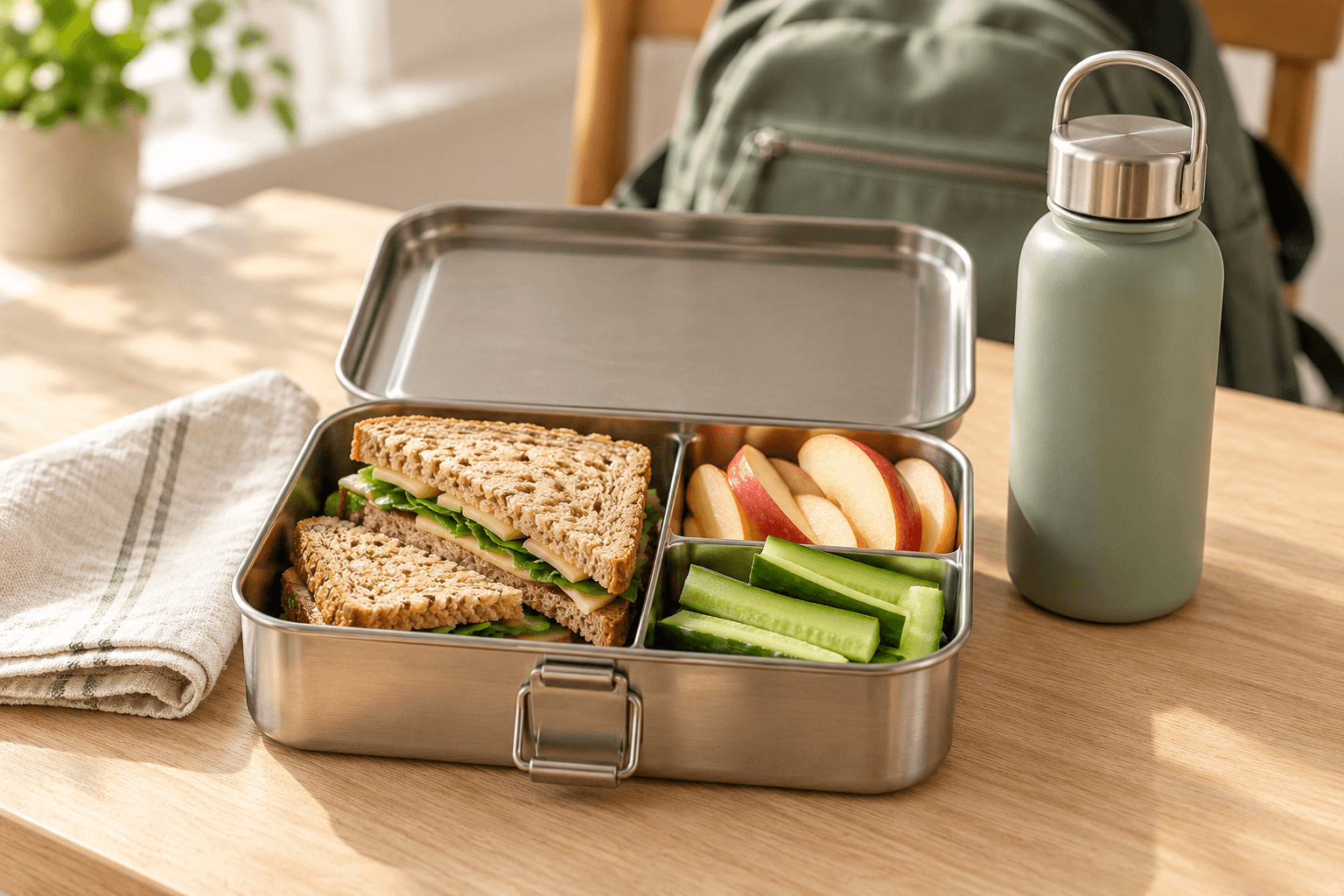
For a school day, a sweet drink carried from lesson to lesson can be replaced by a water bottle, while lunch remains a proper meal. A lunchbox might include a sandwich and appropriately prepared fruit or vegetables. Adjust for allergies, chewing ability and preferences. The useful change is avoiding constant sipping or grazing, not making the lunchbox smaller or treating hunger as a dental problem.
Agree the same basic approach with grandparents, nursery or another household. Explain which drinks are routine and who helps with the evening brush. Keep the discussion factual rather than asking adults to police every mouthful. If many changes are needed, begin with the one creating the most frequent exposure and review how it works.
Sources: Sugars and dental caries · Care for ages 2–12
Protect the last part of the day
Make the evening brush the final tooth-care step before sleep, using the appropriate fluoride toothpaste and adult help. For an older child who no longer needs infant milk feeds, ordinary thirst after brushing can be met with water. If night feeds or medical nutrition are still needed, ask for an individual plan instead of withholding nutrition.
A food diary can help when decay keeps appearing despite a routine that seems good. Record a few typical days, including drinks and timing, and bring it to the dentist. Its purpose is to identify patterns you may not notice, not to prove that a parent or child has done something wrong. Combine any dietary change with effective cleaning and the prevention plan recommended for the child's risk.
How to brush children's teeth, step by step
Sources: Brushing technique and adult help · Teen oral health
Sources
- Sugars and dental caries WHO · EN
- Care for ages 2–12 Dental Health Foundation · EN
- Dental erosion Oral Health Foundation · EN
- Complementary feeding guidance WHO · EN
- Brushing technique and adult help SDCEP · EN
- Teen oral health Dental Health Foundation · EN