How to brush children's teeth, step by step
Choose fluoride toothpaste, reach the difficult surfaces and adapt the routine when taste, touch or coordination gets in the way.
Created
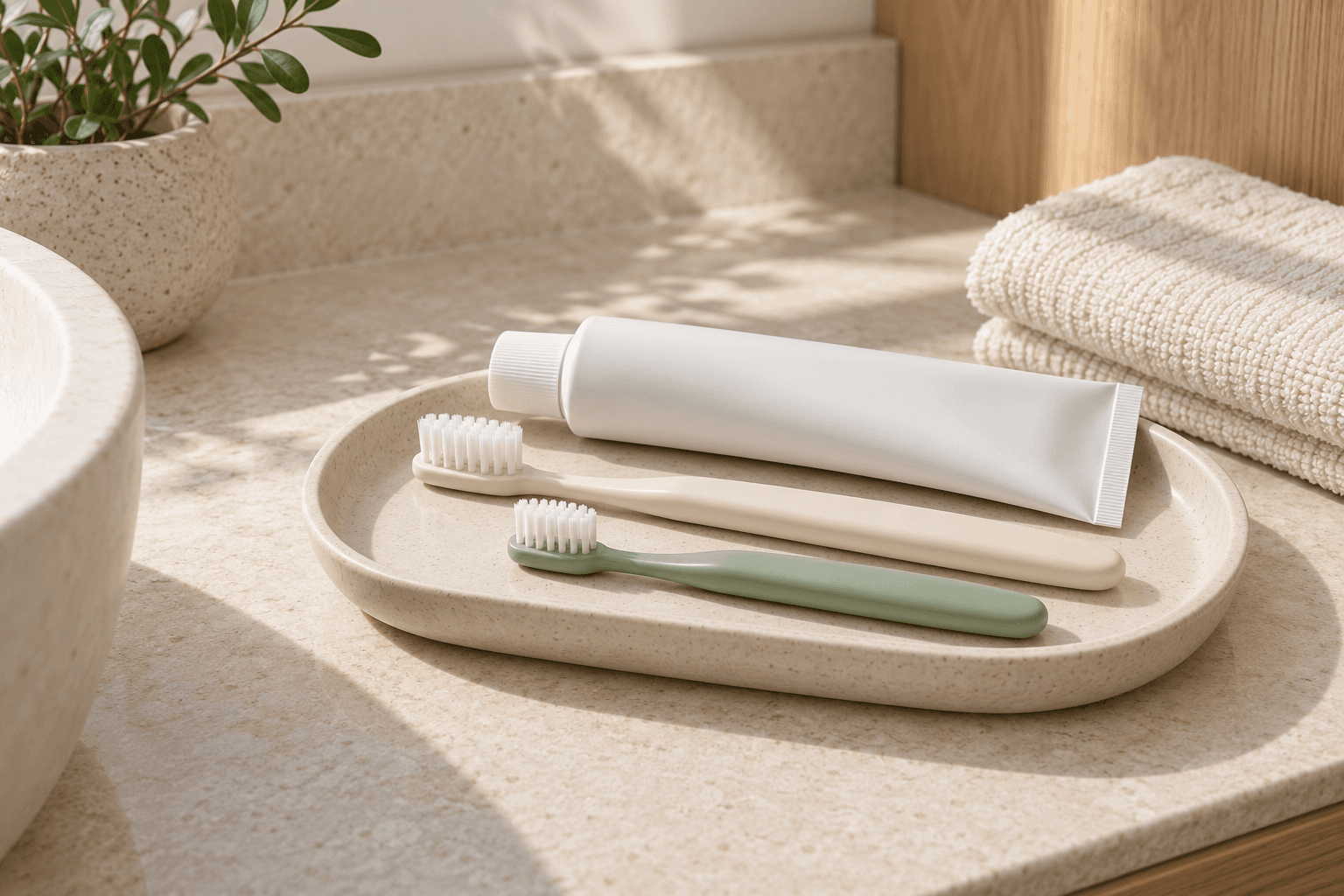
A brush, suitable toothpaste and an adult's help
Start brushing with the first tooth. Use a small soft brush that can reach the back of the mouth comfortably. A manual or electric brush can work; the useful choice is the one the child tolerates and the adult can guide. An electric brush does not automatically clean areas it never touches. Follow its instructions and ask for a demonstration if vibration or technique is a problem.
Brush twice daily, including last thing before sleep. Young children need an adult to do the cleaning, and older children need help or supervision until they can reach all surfaces consistently. Review that ability as teeth erupt, braces are fitted or health needs change. A birthday alone cannot tell you whether the back molars are being cleaned.
Store brushes separately so the heads can dry, and replace a worn brush or head according to its instructions. Do not share toothbrushes. Keep toothpaste and other oral-care products out of a young child's reach; a pleasant flavour should not turn them into a snack or toy.
Sources: Brushing technique and adult help · Children’s teeth: brushing and visits
Read concentration and amount separately
Fluoride helps protect tooth enamel against decay. The number followed by “ppm” on the pack tells you the fluoride concentration. The amount squeezed onto the brush is a separate decision. A tiny amount of an appropriate paste is different from filling the brush with a lower-strength product, and “children's toothpaste” is not a reliable description of either.
For consistency, these guides use the European Academy of Paediatric Dentistry's 2019 age reference. Other national advice uses different age boundaries, so do not combine pieces of several tables. This is a reference to discuss with your dentist, who can adjust prevention for decay risk and the child's ability to spit.
- First tooth to under two years: 1000 ppm fluoride, a rice-grain amount, twice daily.
- Two to six years: 1000 ppm fluoride, a pea-sized amount, twice daily; a dentist may advise a higher concentration according to risk.
- Above six years: 1450 ppm fluoride, twice daily. The EAPD reference describes 0.5–1 g, up to the length of the brush head; ask the dentist to demonstrate an amount appropriate to the brush and child.
An adult should dispense toothpaste for young children. Encourage spitting when the child is able, without rinsing afterwards. Do not add fluoride tablets, drops, high-strength prescription toothpaste or rinses on your own. The clinician needs to consider the child's existing sources and needs before recommending additional products.
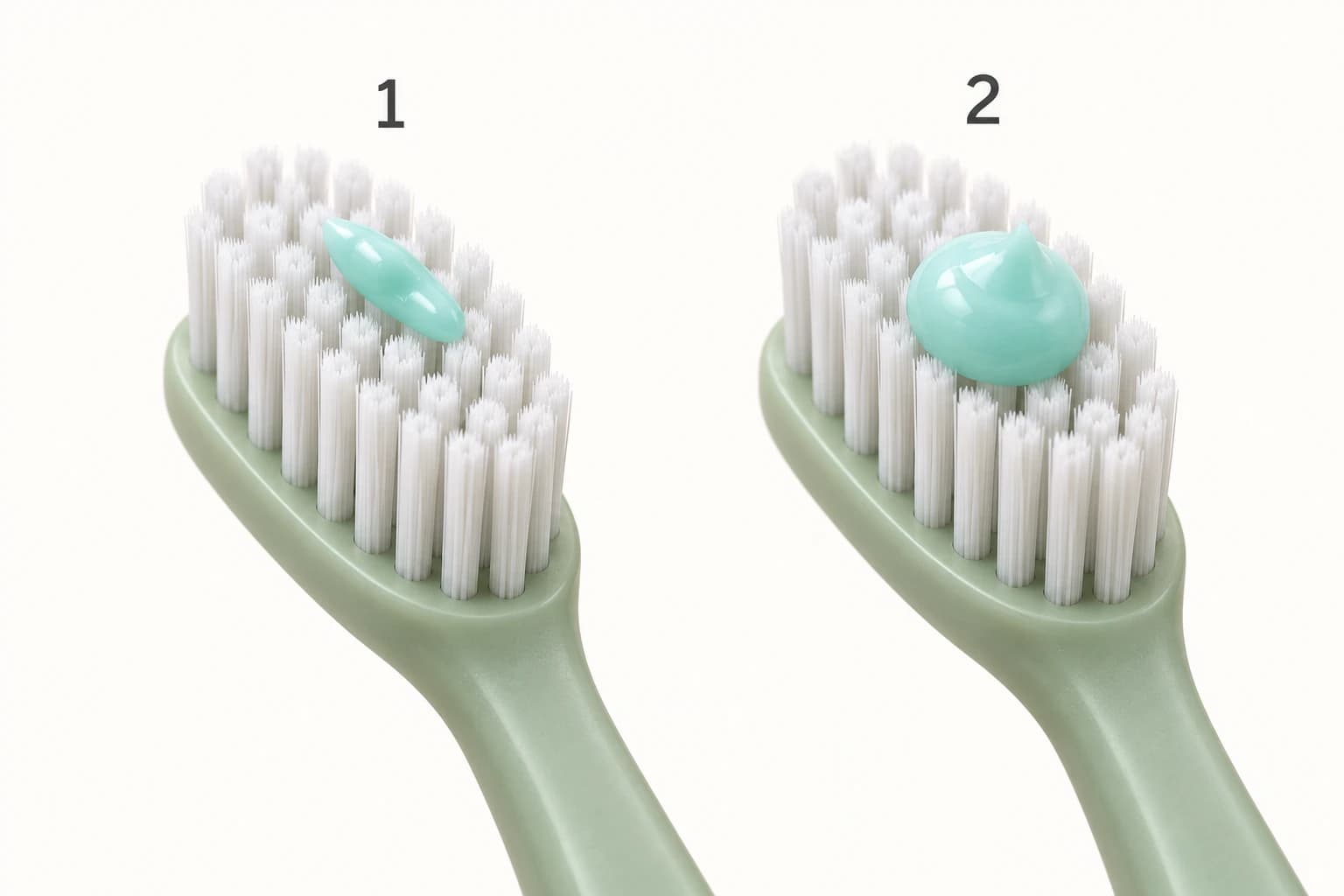
1: a rice-grain amount. 2: a pea-sized amount. Both brush heads are shown at the same scale. Use the age and concentration guidance above.
Sources: European fluoride guidance
A route around the mouth
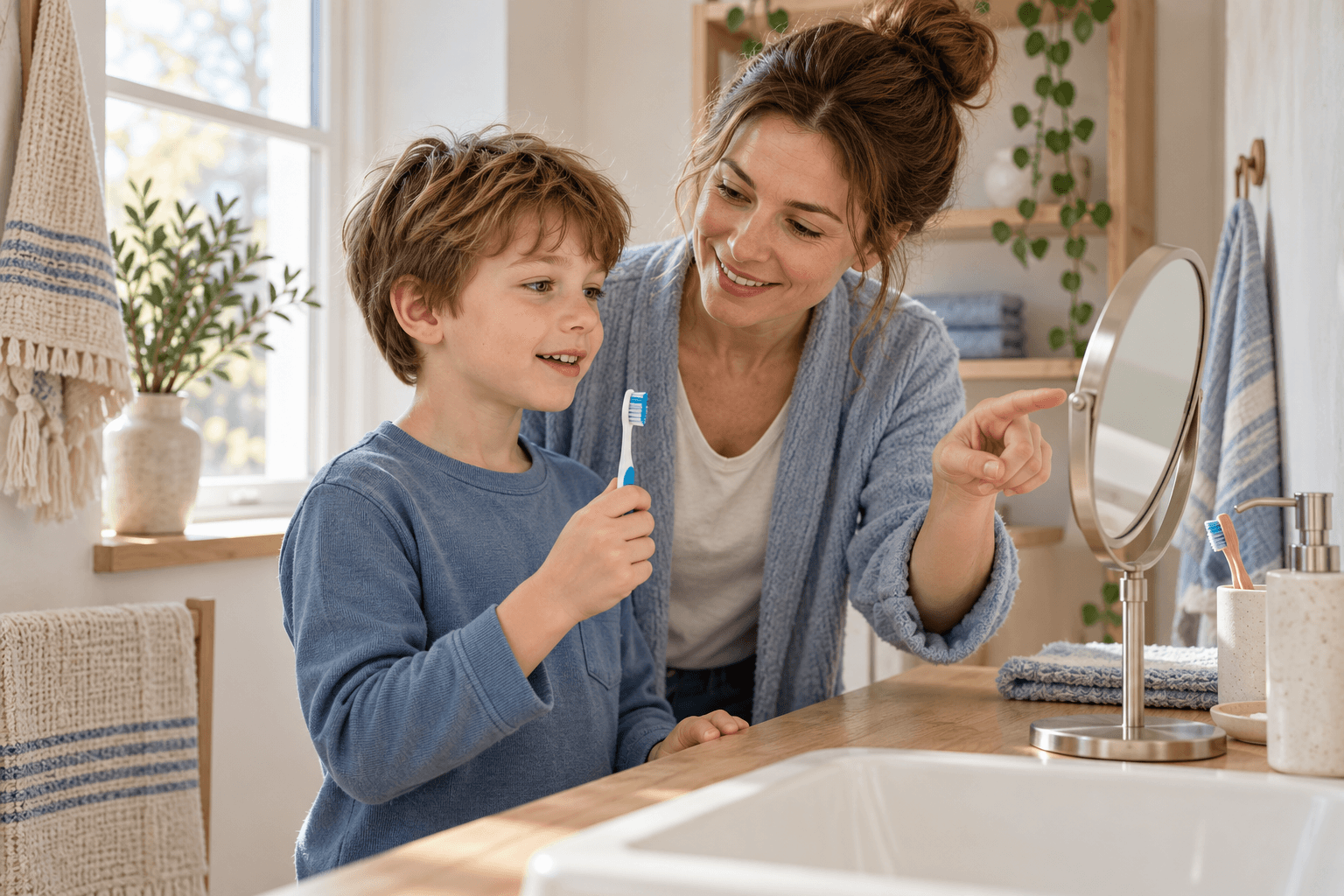
Choose a position in which the child's head is supported and you can see the teeth. Stand behind a child at the mirror or sit together, depending on what is comfortable. Do not let a child walk or run with a toothbrush in their mouth: a fall can cause an injury. Lift the lip gently when needed so the brush can reach the gumline without force.
- Start on the outside surfaces and move slowly around one jaw, then the other, with small gentle movements close to the gums.
- Clean the inside surfaces. Angle the brush to reach behind the front teeth rather than skipping the narrow space.
- Clean the chewing surfaces, including the very last teeth. Look for partly erupted molars that sit below their neighbours and may need a side-on approach.
- Let the child spit out excess paste when able. Avoid a water rinse that washes the remaining fluoride away.
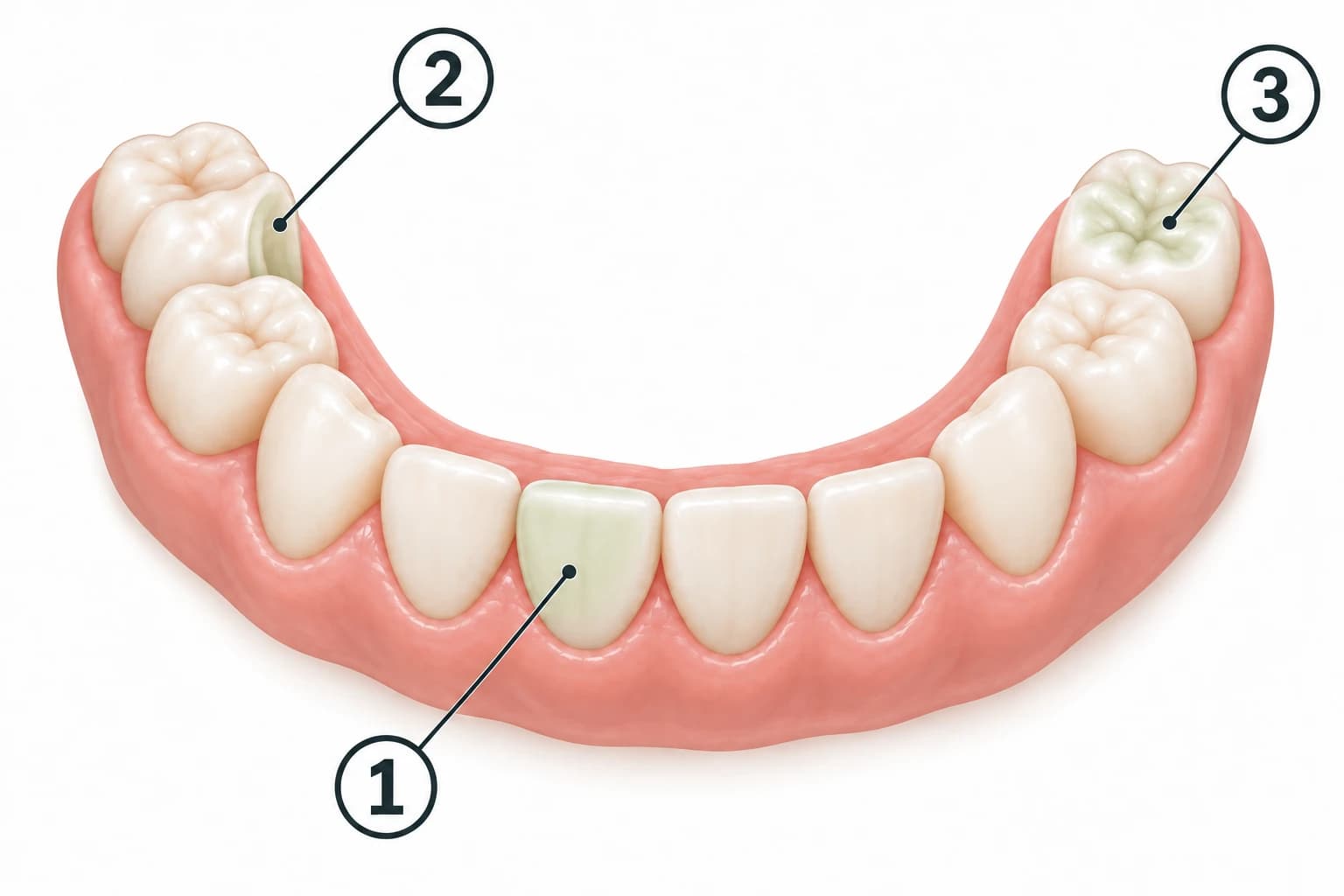
1: outer surfaces facing the lips and cheeks. 2: inner surfaces facing the tongue. 3: chewing surfaces of the back teeth. The model shows the lower jaw; clean the same surfaces on the upper teeth too.
About two minutes is a useful routine once there are more teeth, but coverage matters more than watching the clock. For an infant with a few teeth, clean those teeth carefully. If an area repeatedly hurts, pause and seek advice rather than trying to push through it. Our age guides explain the positions and difficulties most relevant to each stage.
When your child wants to try, guide their hand gently so they can feel the movement and see the teeth in the mirror. Then check and finish any missed surfaces. A timer can help a child stay involved, but it does not show whether every surface is clean.
Sources: Brushing technique and adult help · Children’s teeth: brushing and visits
Cleaning between teeth and around appliances
A toothbrush cannot always reach where two teeth touch. Ask the dental team whether your child's contacts need floss or another method, and have them show you. An adult may need to do this for a younger child. Guide floss gently against the tooth surface without snapping it into the gum. Do not force an interdental brush into a space that is too small.
For braces, the appropriate brush size and route depend on the appliance. An interdental brush used under a wire has a different task from flossing a tight contact. Buying several devices is less useful than learning one method that reaches the missed area. Bring the tools you already have to an appointment and ask the clinician to watch you use them.
Cleaning teeth with braces and retainers
Sources: Care for ages 2–12 · Oral health during orthodontic treatment
Extra products have specific jobs
Mouthwash does not remove plaque in place of brushing. Young children who cannot reliably spit should not be given a rinse as a routine extra. Older children may be advised to use a fluoride rinse for a particular reason; follow the dental team's age and product instructions and use it at a separate time from brushing, so it does not wash away concentrated toothpaste fluoride.
A disclosing product can make missed plaque easier to see when used as instructed, but it is a learning tool, not a diagnosis or a treatment. Avoid using colour as a way to shame a child. A useful response is to practise reaching the highlighted area together, then check whether the routine has become easier.
Sources: European fluoride guidance · Children’s teeth: brushing and visits
When the ordinary routine is not working
Keep a short note of the difficult moment: opening the mouth, the mint flavour, foaming, vibration, touching the back teeth or being rushed. This makes professional advice more specific. Try one adjustment at a time, such as a quieter room, a smaller head or a tolerated fluoride paste with a milder flavour. Keep the sequence predictable and give the child an agreed way to request a pause.
Sensory needs, limited hand movement and swallowing difficulties may require a tailored plan. Do not apply generic advice about rinsing, positioning or equipment if the child's care team has given a different plan. A gradual familiarisation programme should still work towards effective daily cleaning, with help to address pain and the parts of the routine that remain difficult.
For two households or several caregivers, write down the agreed paste, amount and who finishes the brushing. Include the dental contact and areas that need particular attention. This small handover can prevent conflicting instructions and helps the child experience a familiar routine wherever they sleep.
Brushing together in the preschool years
A child's dental visit: before, during and after
Sources: Oral care and sensory needs · Dental anxiety
Sources
- Brushing technique and adult help SDCEP · EN
- European fluoride guidance EAPD · EN
- Care for ages 2–12 Dental Health Foundation · EN
- Oral health during orthodontic treatment British Orthodontic Society · EN
- Oral care and sensory needs Birmingham Community Healthcare NHS · EN
- Dental anxiety SDCEP · EN