- For adult patients
Teeth, dry mouth and dentures in later life
How medicines, a dry mouth, dentures and changes in movement can affect your daily oral care.
Created Updated
Pain and dryness are not inevitable with age
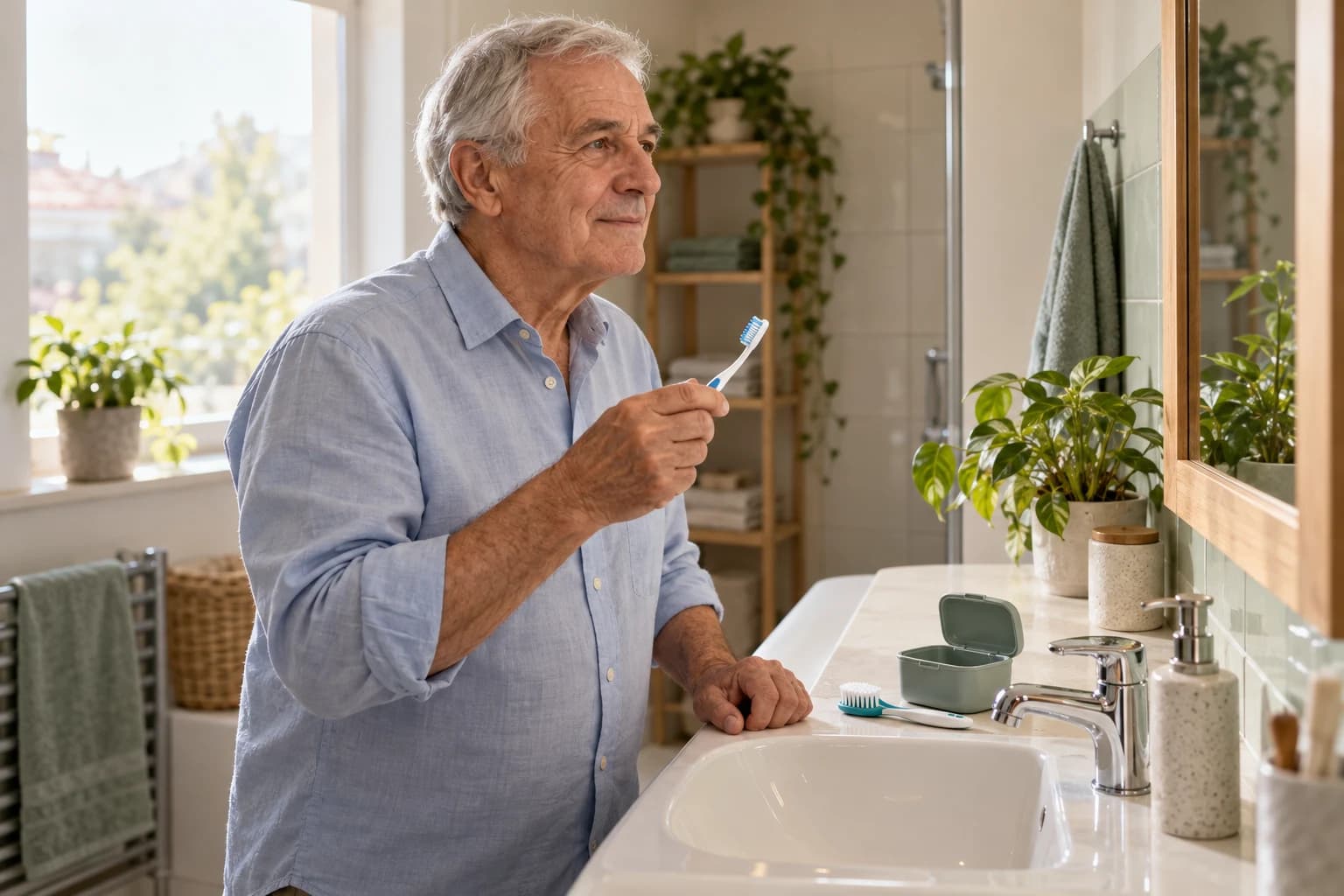
It is possible to keep your natural teeth into later life. New chewing difficulties, pain or dryness should not simply be accepted as unavoidable ageing. They may have a cause that needs assessment and an adjustment to care.
Notice which task has become harder: holding the brush, reaching the back teeth, remembering the sequence or travelling to an appointment. Age alone does not determine the need for help. Care should follow the person's abilities and preferences.
Sources: Oral hygiene basics · Care for older adults and adults with disabilities
Persistent dryness needs assessment
Saliva moistens the mouth, helps swallowing and protects tooth surfaces. Too little can make eating and speaking harder and increase the risk of decay. Medicines, illness or treatment can cause dryness; age alone does not make it normal.
Show your doctor and dentist your current medicine list and explain when the dryness began. Do not stop or reduce prescribed medicine yourself. Small sips of water may help if you do not have fluid restrictions or a swallowing plan that says otherwise. Sugar-free gum is an option only when you can chew and swallow safely.
Ask about saliva substitutes and additional fluoride protection. Frequent sugary sweets are not a good solution for teeth. Relieving the dry feeling and preventing decay are separate tasks.
Sources: Dry mouth · Oral hygiene basics
Clean the denture and your mouth separately
If you wear a removable denture, brush any remaining natural teeth with fluoride toothpaste morning and evening. Gently clean your gums and tongue with a soft brush too. Use a separate brush and a product suited to the denture material to clean the denture. Brush it gently morning and evening; ordinary toothpaste can scratch it.
Remove and clean it over a soft towel or a basin containing water to reduce the risk of breakage if dropped. Dentures are usually removed at night unless your dentist advises otherwise. Follow the specific storage and cleaning instructions: materials do not all tolerate the same products.
Looseness, sores, pain or a change in chewing are reasons for a check. Do not file the denture or repair it with household glue. Even without natural teeth, you still need checks of the tissues in your mouth and the denture's fit.
Watch how to clean a denture
Removing and cleaning a denture, shown in the NHS Mouth Care Matters animation. In English with on-screen instructions.
Sources: Caring for removable dentures · Brushing: information for caregivers
Keep the steps the person can do themselves
A more comfortable handle, better lighting or supplies kept together may make care easier. Try one adjustment and check whether it improves actual cleaning. An electric brush is an option if its weight and vibration are comfortable.
When helping someone, first establish the help they want and ask for consent. They may be able to brush independently but need supplies prepared or help with one area. Swallowing difficulties require an individual plan from the treating team.
Helping someone with daily mouth care
Sources: Brushing: information for caregivers · Care for older adults and adults with disabilities
Changes to discuss with the dental team
Let your dentist know about ongoing dryness, pain, difficulty eating, bleeding or a tooth that has become loose. An ulcer that has not healed after three weeks also needs assessment. Have a lump or a red or white patch checked without waiting three weeks. These changes can have several causes and do not necessarily mean cancer.
Bring your medicine list, denture and home-care questions to the appointment. If travel or mobility is difficult, ask the practice about accessibility and suitable support in advance.
Your dental visit: preparation and treatment decisions
Sources: Mouth changes that need assessment · Brushing: information for caregivers
Sources
- Oral hygiene basics NIDCR · EN
- Dry mouth NIDCR · EN
- Caring for removable dentures NHS · EN
- Brushing: information for caregivers NIDCR · EN
- Mouth changes that need assessment NHS · EN