- For adult patients
Everyday care for teeth and gums
How to clean every tooth surface, choose fluoride toothpaste and make cleaning between your teeth part of your day.
Created Updated
What brushing and fluoride do
Brushing removes plaque; fluoride in toothpaste helps protect teeth against decay. Plaque is a film of microorganisms that sticks to tooth surfaces and builds up again. An occasional thorough clean therefore cannot replace a daily routine.
Brush twice a day for about two minutes each time, once just before bed and once at another time. If you work shifts and sleep during the day, keep the same bedtime habit. A timer can help you avoid rushing, but reaching every tooth surface matters more than simply waiting for two minutes to pass.
Read the fluoride concentration
UK prevention guidance recommends toothpaste containing 1350–1500 ppm fluoride for routine adult care. Ppm means parts per million: 1450 ppm, for example, falls within this range. Labels such as “natural”, “gum care” or “whitening” do not tell you whether a toothpaste provides the fluoride you need.
Spit out excess toothpaste without rinsing immediately with water. This leaves fluoride in contact with teeth for longer. If you have prescribed higher-fluoride toothpaste, follow your own instructions. Do not share it or add fluoride tablets or drops without professional advice.
Take the same route around your mouth
Choose a brush with a head small enough to reach your back teeth and a comfortable handle. The NHS advises that soft or medium bristles are suitable for most people.
Manual and electric brushes can both clean effectively. An electric brush moves the bristles, while you guide the head over each surface according to the model's instructions. Use light pressure.
An electric brush may be easier if hand movements are difficult. A timer helps you allow enough time; a pressure sensor, if fitted, warns when you press too hard. Neither confirms that you have reached every surface. Our electric toothbrush guide explains technique and what to check when choosing one.
- Work around the outer surfaces of the upper and lower teeth, including the gumline, using light pressure.
- Clean the inner surfaces. Change the angle of the brush to reach the inner surfaces of the front teeth.
- Clean the chewing surfaces and the last molars, including the back of the last tooth.
- Spit out the toothpaste. Rinse the brush and let it dry. Replace the brush or brush head when the bristles wear out.
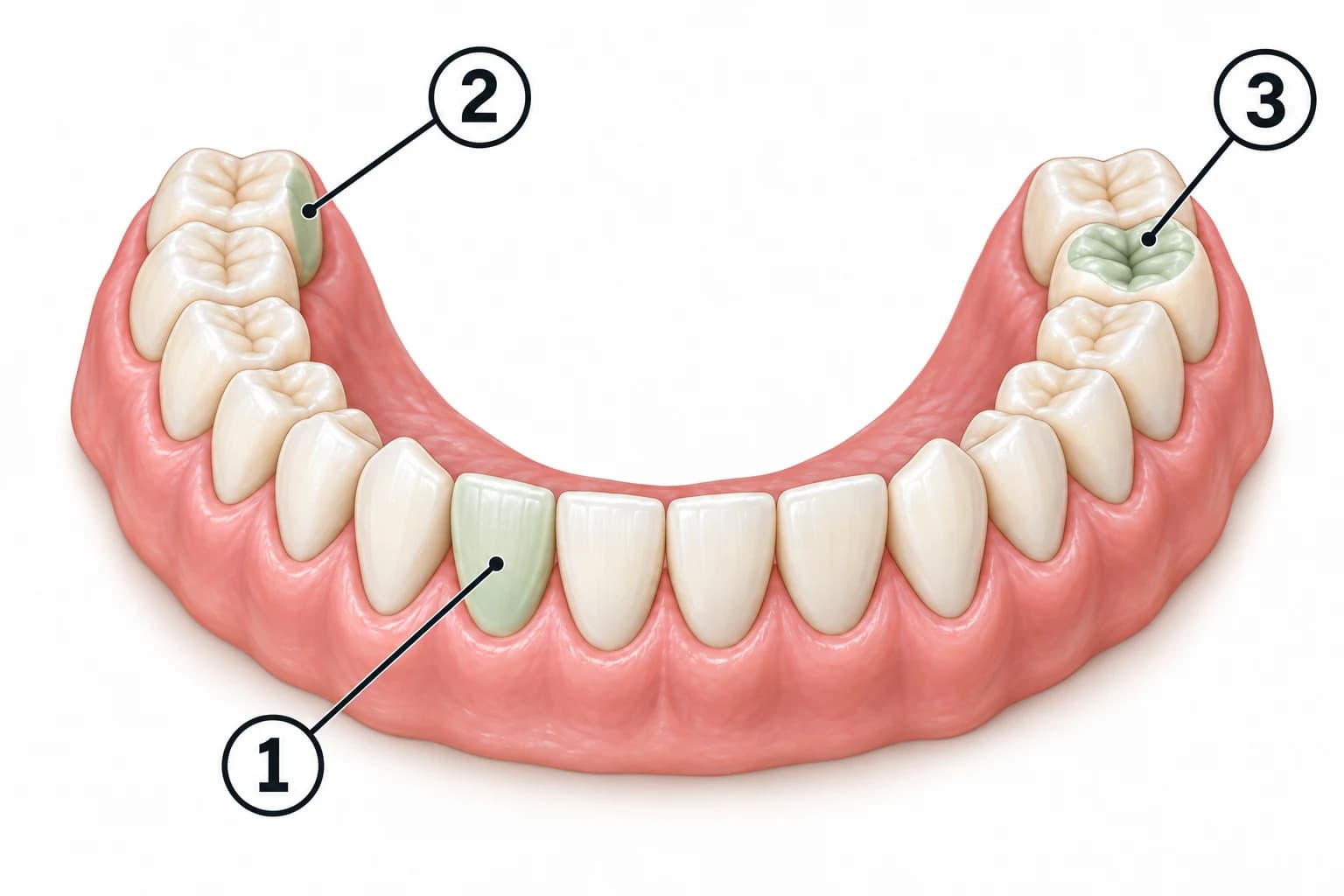
1. Outer surface facing the lips and cheeks. 2. Inner surface facing the tongue. 3. Chewing surface. The diagram shows the lower teeth. Clean these surfaces on the upper teeth too.
If a spot remains difficult to reach, take your brush to an appointment and ask for a demonstration. Extra pressure does not solve a problem of access. Repeated pain deserves assessment rather than brushing through it.
Video: brushing with a manual toothbrush
This NHS England animation shows close-up views of brushing the outer, inner and chewing surfaces of the teeth. The explanations are in English; the written steps are above.
Clean between teeth as a separate step
A toothbrush does not reach all the surfaces between teeth equally well. Clean these daily with a suitable aid. An interdental brush may suit an open space; floss may suit a tight contact. Different spaces may need different sizes, and a brush should never be forced through.
Ask the dental team to demonstrate the size and movement for your teeth, bridges or implants. Choose a time you can keep to, such as before bedtime brushing, so the two actions become one routine.
A water flosser, also called an oral irrigator, directs a stream of water between teeth. If floss is difficult to use, ask your dentist whether an irrigator would suit you. It does not replace toothbrushing. Evidence for its additional effect on plaque and gum inflammation is limited and inconsistent, so do not assume it replaces every other aid. Our oral irrigator guide explains its use and limits.
Read about floss and interdental brushes. Bleeding deserves a dental assessment; its appearance alone cannot establish the cause.
When mouthwash can help
Mouthwash is an addition for a particular need. A fluoride mouthwash, for example, can help prevent decay, but it does not replace brushing or cleaning between teeth.
If you use one, choose another time of day, such as after lunch. Even a fluoride rinse washes away concentrated toothpaste fluoride when used straight after brushing. For a medicated rinse, ask your dentist what it is for and how long to use it.
How to find missed plaque
Plaque-disclosing tablets and liquids colour plaque so it is easier to see. You can use them after cleaning to identify missed areas. Follow the instructions for your product and look at the coloured areas in a mirror.
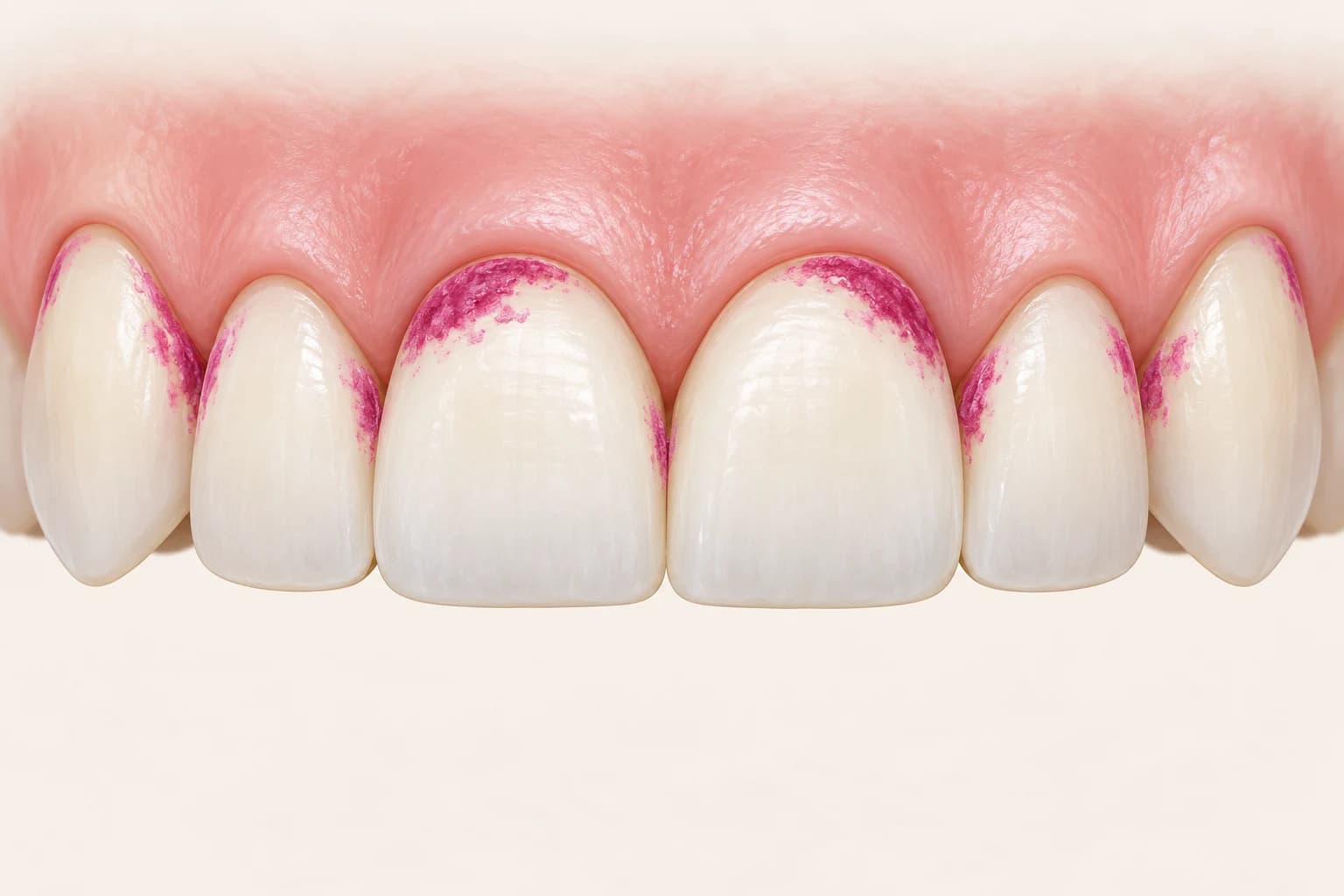
The dark pink patches in the illustration show plaque left near the gumline and between the teeth. The colour depends on the product.
The dye does not clean your teeth. Clean the missed surfaces with your toothbrush or a suitable interdental aid. If you keep missing the same area, ask your dentist to demonstrate how to reach it. See our guide to plaque-disclosing products. They help you check your technique but do not replace a dental examination.
When your routine needs adjusting
Dry mouth, a new denture, limited hand movement or gum treatment may mean your routine needs adjusting. Explain the specific difficulty: holding the handle, reaching a back tooth, tolerating the toothpaste flavour or spitting it out. This helps the team suggest a suitable change.
Sources
- Cleaning your teeth NHS · EN
- Oral hygiene guidance Delivering Better Oral Health · EN
- Oral hygiene basics NIDCR · EN
- Dry mouth NIDCR · EN
- Plaque, disclosing products and cleaning aids Dental Health Foundation · EN
- Manual toothbrushing animation NHS England Workforce, Training and Education · EN