- For teenagers
- For parents and caregivers
Looking after your teeth as a teenager
Make daily care work around school, braces and sport, and understand bleeding gums, fresh breath and acidic drinks.
Created Updated

Build a routine that fits your day
The most useful routine is one you can repeat on an ordinary school day. Brush twice daily, including before sleep, with fluoride toothpaste. For this age group, the European reference used in our guides is 1450 ppm fluoride. Read the concentration on the tube and follow any individual advice from your dentist. More pressure does not make brushing more effective; a small soft head and careful coverage matter.
Work around the outside, inside and chewing surfaces, paying attention to the gumline and the last molars. Spit afterwards without rinsing away the paste. If evenings disappear into homework or your phone, attach brushing to something reliable, such as getting ready for bed, rather than waiting until you are already falling asleep.
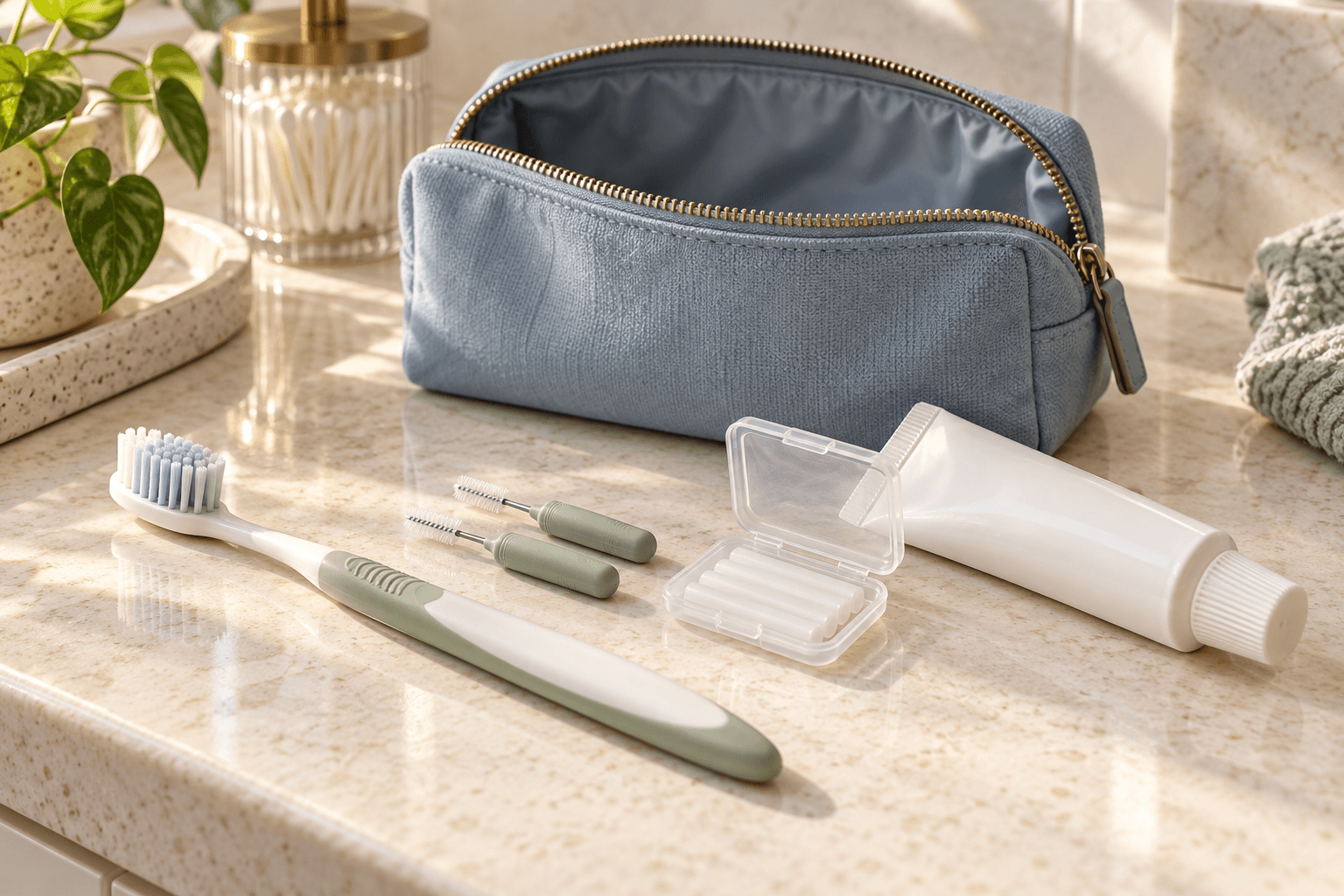
A travel kit can help on trips or overnight stays. It only needs the tools you actually use. If a parent still helps because of coordination, sensory or other needs, that is ordinary support, not a failure to be independent. Ask the dental team to make the routine easier to manage.
Sources: Brushing technique and adult help · European fluoride guidance
Plaque, bleeding and fresh breath
Plaque is the soft film that builds up on teeth. Around the gumline it can contribute to inflammation and bleeding. Tartar is hardened deposit that cannot be brushed away at home. If your gums repeatedly bleed, arrange a dental check and ask for a demonstration of gentle cleaning. Stopping brushing in that area can leave more plaque behind; scrubbing harder can also cause harm.
Breath changes do not automatically mean you need a stronger mouthwash. Consider whether all surfaces are cleaned and whether food remains between teeth. The dentist can show you appropriate between-teeth cleaning and check persistent odour, soreness or a dry mouth. Do not scrape deposits with sharp tools or use fragrance to hide a symptom that keeps returning.
A new symptom is worth describing precisely: when it started, whether it is in one area, and whether there is pain or swelling. Bleeding does not prove a particular diagnosis, and a photograph cannot establish what is happening under the gums. A simple examination is more useful than guessing from online pictures.
How to brush children's teeth, step by step
Sources: Teen oral health · Sore and bleeding gums
Braces create extra places to clean
Fixed braces leave narrow spaces around brackets and under wires where food and plaque can collect. Brush above and below the brackets as well as along the gums. Ask the orthodontic team to choose an interdental brush that fits and show you how to use it without forcing the wire. Their demonstration should make sense with your actual appliance.
Keep seeing your general dentist during orthodontic treatment. Straightening appointments do not replace checks for decay or gum problems. If a bracket loosens, a wire hurts or a removable appliance stops fitting, contact the orthodontic team. Do not try to repair it with glue or follow an improvised cutting tutorial.
White patches around brackets can be an early sign of mineral loss, although not every mark has the same cause. Tell the team about a new patch or sensitivity. Buying a whitening product does not address the reason it appeared, and an online promise of a brighter smile is not a reason to use household acids or abrasives on teeth.
Cleaning teeth with braces and retainers
Sources: Oral health during orthodontic treatment · Fixed appliance care
Sugar and acidity are different issues
Bacteria in plaque use sugars to make acids that contribute to decay. Acidic drinks can also wear enamel directly, including drinks with little or no sugar. This is why a sugar-free energy or sports drink is not automatically tooth-friendly. Read both the nutrition information and the type of drink, rather than treating “zero sugar” as an all-purpose health claim.
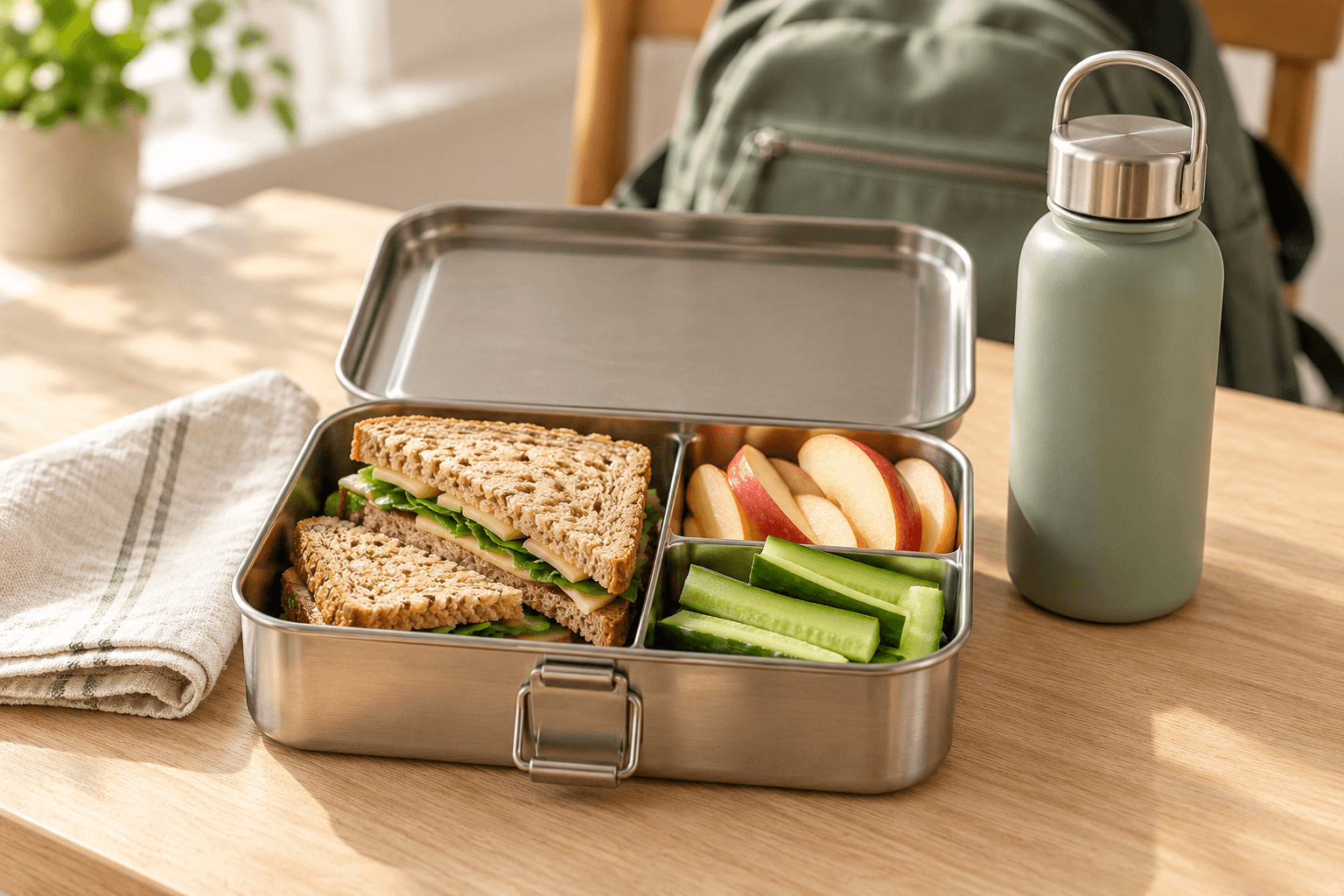
For ordinary thirst, water is the simplest option. Avoid sipping a sweet or acidic drink across several hours or holding it around the teeth. If one is part of your day, having it with a meal reduces repeated exposures compared with carrying it between lessons. Whole fruit and juice are not equivalent: juice releases sugars and is easy to consume frequently.
If sensitivity, reflux, frequent vomiting or a very restricted diet is affecting your mouth, talk to a clinician you trust. These need support that considers your whole health. You do not have to solve the problem by brushing harder or quietly removing more foods from your diet.
Food and drinks: making the daily pattern work for teeth
Sources: Sugars and dental caries · Dental erosion
Protect your teeth during sport
Use a well-fitting mouthguard for contact or collision sport and ask about one suitable for braces if you wear them. Tell the dentist if it becomes loose or rubs. Keep it clean according to its instructions and in a suitable case between uses. Its purpose is dental protection; it cannot make every impact safe.
After a blow, a tooth may be damaged even if the chip looks small. Get dental advice for a loose, displaced or broken tooth. A permanent tooth knocked out completely needs immediate help. Our injury guide explains what to do and why a milk tooth must never be put back. Save the dental practice's number so you can find it without searching during an accident.
A chipped or knocked-out tooth: what to do first
Sources: Sports mouthguards · First aid for a knocked-out tooth
Take part in decisions about your care
You can ask what the dentist sees, what the options are and how much time you have to decide. Mention medicines, vaping or tobacco use, mouth piercings, a dry mouth and any difficulty keeping up with care. Honest information helps the team give relevant advice. Ask for an explanation in words you understand and tell them if a procedure worries you.
A useful goal for the next visit is specific: improve cleaning around one difficult molar, get a comfortable mouthguard or understand why a gum keeps bleeding. For parents, agree on what support the teenager wants and what they can manage themselves. Quiet practical help with supplies, transport and appointments often works better than repeated criticism.
A child's dental visit: before, during and after
Sources: Dental anxiety · Individual recall planning
Sources
- Brushing technique and adult help SDCEP · EN
- European fluoride guidance EAPD · EN
- Teen oral health Dental Health Foundation · EN
- Sore and bleeding gums NHS · EN
- Oral health during orthodontic treatment British Orthodontic Society · EN
- Fixed appliance care British Orthodontic Society · EN
- Sugars and dental caries WHO · EN
- Dental erosion Oral Health Foundation · EN
- Sports mouthguards British Orthodontic Society · EN
- First aid for a knocked-out tooth NHS · EN
- Dental anxiety SDCEP · EN
- Individual recall planning SDCEP · EN