- For parents and caregivers
- For teenagers
Cleaning teeth with braces and retainers
A practical routine for brackets, wires and removable appliances, including food choices, problems to report and follow-up care.
Created Updated
Protect the teeth while their position changes
Orthodontic treatment adds places where plaque can collect. Brackets and wires make the route around the mouth more complicated, but they do not change the need to clean the tooth surfaces and gumline. The aim is to finish treatment with healthy teeth and gums as well as an improved position. Good cleaning needs to be established before and maintained throughout treatment.
Keep attending the general dentist as well as the orthodontist. An adjustment visit is not a replacement for checks on decay, gums and other oral-health needs. Ask both teams who is responsible for each part of prevention so appointments do not leave a gap. If your child needs practical help, continue it even if they are old enough to manage many other tasks independently.
Sources: Oral health during orthodontic treatment · Fixed appliance care
A route around fixed braces
Brush with fluoride toothpaste twice daily, including before sleep, and follow any additional cleaning advice from the orthodontic team. For most teenagers our European reference is 1450 ppm fluoride; higher-strength products need an individual recommendation. Spit after brushing without a water rinse. Give yourself enough time to work around the appliance instead of brushing faster with more pressure.
- Clean along the gumline, then angle the small soft brush above and below each bracket so it reaches the tooth surface around it.
- Clean the inside and chewing surfaces of every tooth, including the last molars. Brackets should not draw all your attention to the front teeth.
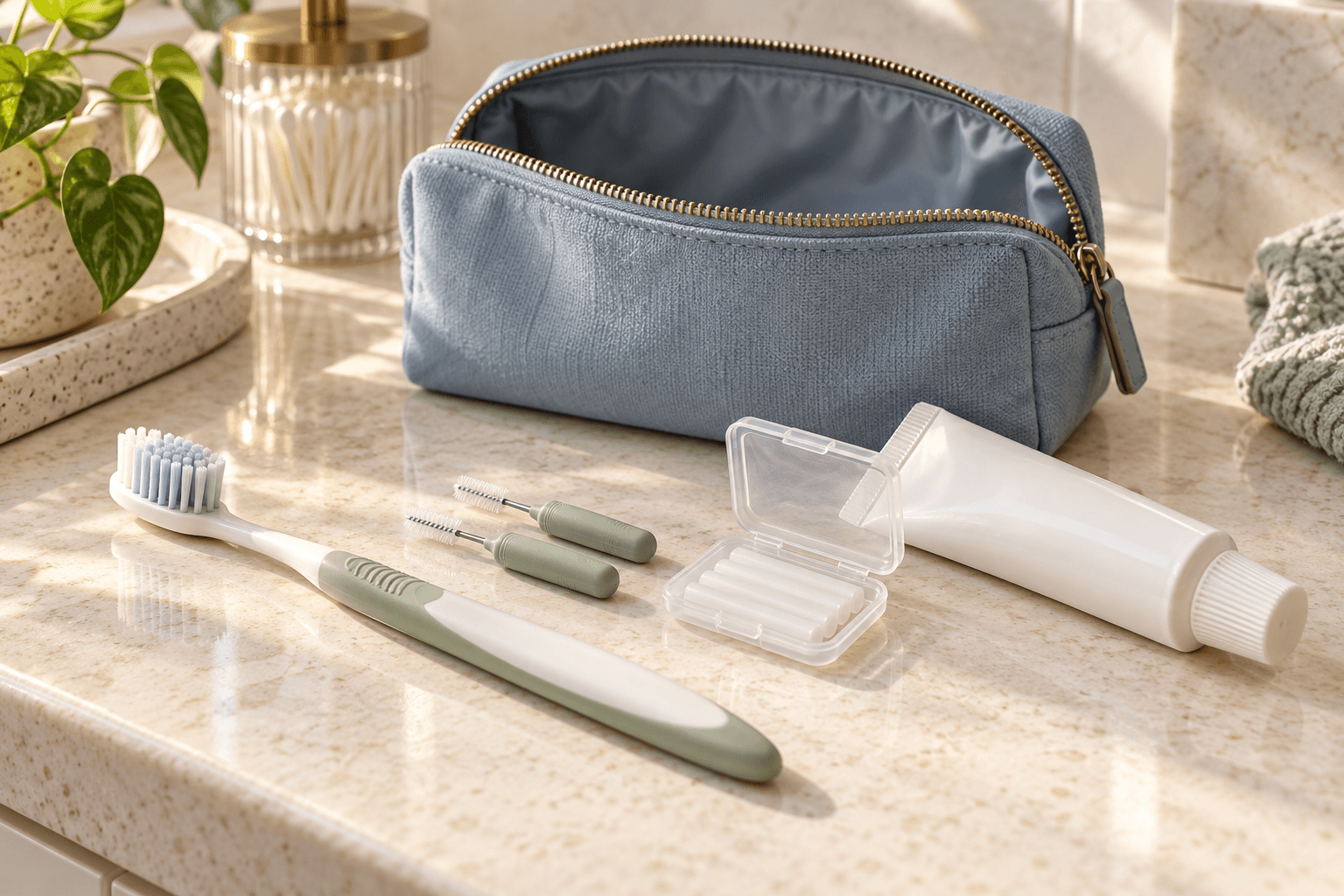
- Use the interdental brush size demonstrated by the team to clean accessible spaces under the wire and around brackets. Never force a brush into a tight space or bend the appliance to fit it.
- Clean between touching teeth using the method shown for your mouth and appliance. Ask for another demonstration if a threader or another tool is difficult to use.
A small mirror and good light can make it easier to inspect the route. If you see food after a meal, remove it gently with the recommended tool rather than a sharp object. A water flosser may be an additional aid for some people, but it does not make careful brushing around brackets optional. Bring your kit to a visit so the team can check technique.
Watch cleaning around braces
Brushing around brackets and cleaning under the wire, demonstrated on a dental model by the British Orthodontic Society. In English with English captions.
Sources: Fixed appliance care · Brushing technique and adult help · European fluoride guidance
White marks, bleeding and sensitivity
White patches near brackets may be areas where enamel has lost minerals, although other causes are possible. Report new marks, persistent sensitivity or bleeding gums. Do not wait until the braces come off to ask whether something has changed. Early assessment can help the team adapt prevention and decide whether treatment needs to change.
A rinse cannot compensate for plaque left around a bracket. If a fluoride mouthwash is recommended, use it at a separate time from brushing and according to the child's age and ability to spit. Do not add antiseptic or whitening products without advice. Gum soreness also deserves a technique check, because both missed plaque and overly forceful cleaning can cause problems.
Sources: Oral health during orthodontic treatment · Sore and bleeding gums
Choose food that the appliance can handle
Hard or sticky foods can damage fixed braces. Follow the orthodontist's instructions, cut suitable foods into manageable pieces and avoid biting directly into hard items with the front brackets. This does not mean abandoning a varied diet. A sliced apple, for example, may be more manageable than biting into a whole one; the team's advice for your appliance takes priority.
Keep sweet and acidic drinks from becoming a repeated all-day habit. Water is a practical usual drink. If a removable appliance must come out for eating, store it in its case rather than a tissue that may be thrown away. Follow the prescribed wear schedule; taking it out more often or for longer can affect treatment.
Food and drinks: making the daily pattern work for teeth
Sources: Fixed appliance care · Sugars and dental caries
When a wire, bracket or appliance causes trouble
Contact the orthodontic team if a bracket comes loose, a wire rubs, an appliance breaks or something stops fitting. Describe the problem and ask whether a photograph would help them triage it. Orthodontic wax may temporarily cover a rubbing area as instructed, but it is not a repair. Do not glue parts back, bend wires experimentally or follow a generic cutting tutorial.
Mild soreness after an adjustment can occur, but severe or persistent pain, swelling, fever or an injury needs assessment. A displaced wire causing choking or breathing difficulty is a medical emergency; call 112 in Bulgaria. If a tooth is injured during sport or a fall, follow dental-injury advice as well as contacting the orthodontist.
Sources: Fixed appliance care · Dental abscess and urgent signs · Emergency number 112 in the EU
Care continues after active treatment
Retainers help maintain the result while teeth remain capable of moving. Wear them for the schedule prescribed by the orthodontist; do not stop because the teeth look straight. Clean removable retainers using the method recommended for their material, avoid hot water that can distort them, and keep them in their case when not worn. Tell the team promptly if one is lost, damaged or no longer fits, rather than forcing it into place.
A fixed retainer still needs cleaning around the wire and between teeth, using the demonstrated method. Report a loose attachment even if the wire remains in the mouth. For contact sport during treatment, ask about a mouthguard designed to accommodate the appliance and changes in tooth position. Review its fit as treatment progresses.
A chipped or knocked-out tooth: what to do first
Sources: Retainers after treatment · Sports mouthguards
Sources
- Oral health during orthodontic treatment British Orthodontic Society · EN
- Fixed appliance care British Orthodontic Society · EN
- Brushing technique and adult help SDCEP · EN
- European fluoride guidance EAPD · EN
- Sore and bleeding gums NHS · EN
- Sugars and dental caries WHO · EN
- Dental abscess and urgent signs NHS · EN
- Emergency number 112 in the EU Your Europe · EN
- Retainers after treatment British Orthodontic Society · EN
- Sports mouthguards British Orthodontic Society · EN