- For parents and caregivers
A chipped or knocked-out tooth: what to do first
Immediate steps for parents and carers, with separate advice for milk and permanent teeth and clear reasons to seek urgent help.
Created Updated
Check the child before the tooth
After a fall or collision, first check whether the child is alert and breathing normally and whether there may be a serious head or facial injury. Call 112 in Bulgaria for loss of consciousness, breathing difficulty, uncontrolled heavy bleeding or another serious emergency. Do not let the search for a tooth delay care for the child.
For an isolated dental injury, contact a dentist immediately and describe what happened. A knocked-out permanent tooth is time-critical; do not wait until the next morning or a routine appointment. If two adults are present, one can call while the other helps the child. Give the child's age, the time of injury, whether the tooth is out or displaced and any other injuries.
Milk teeth must never be replanted. A child of school age can have milk and permanent teeth together, so age alone does not identify the tooth. If you cannot tell which it is, do not guess or force it into the socket. Keep the tooth moist in milk and get immediate dental advice.
Sources: First aid for a knocked-out tooth · Emergency number 112 in the EU
If a permanent tooth is completely knocked out
The following applies only when you are sure it is a permanent tooth. The cells on the root are delicate, so handle it by the crown, the part normally visible in the mouth. Do not scrub the root, disinfect it or wrap it in a dry tissue. Acting promptly matters more than trying to make the tooth look perfectly clean.
- Pick up the tooth by the crown. If dirty, gently rinse it briefly in milk or saline without rubbing the root.
- If the child is conscious and cooperative, and you are confident it is a permanent tooth, gently place it back in its socket without forcing it. Have the child bite gently on a clean cloth to hold it and go straight to a dentist.
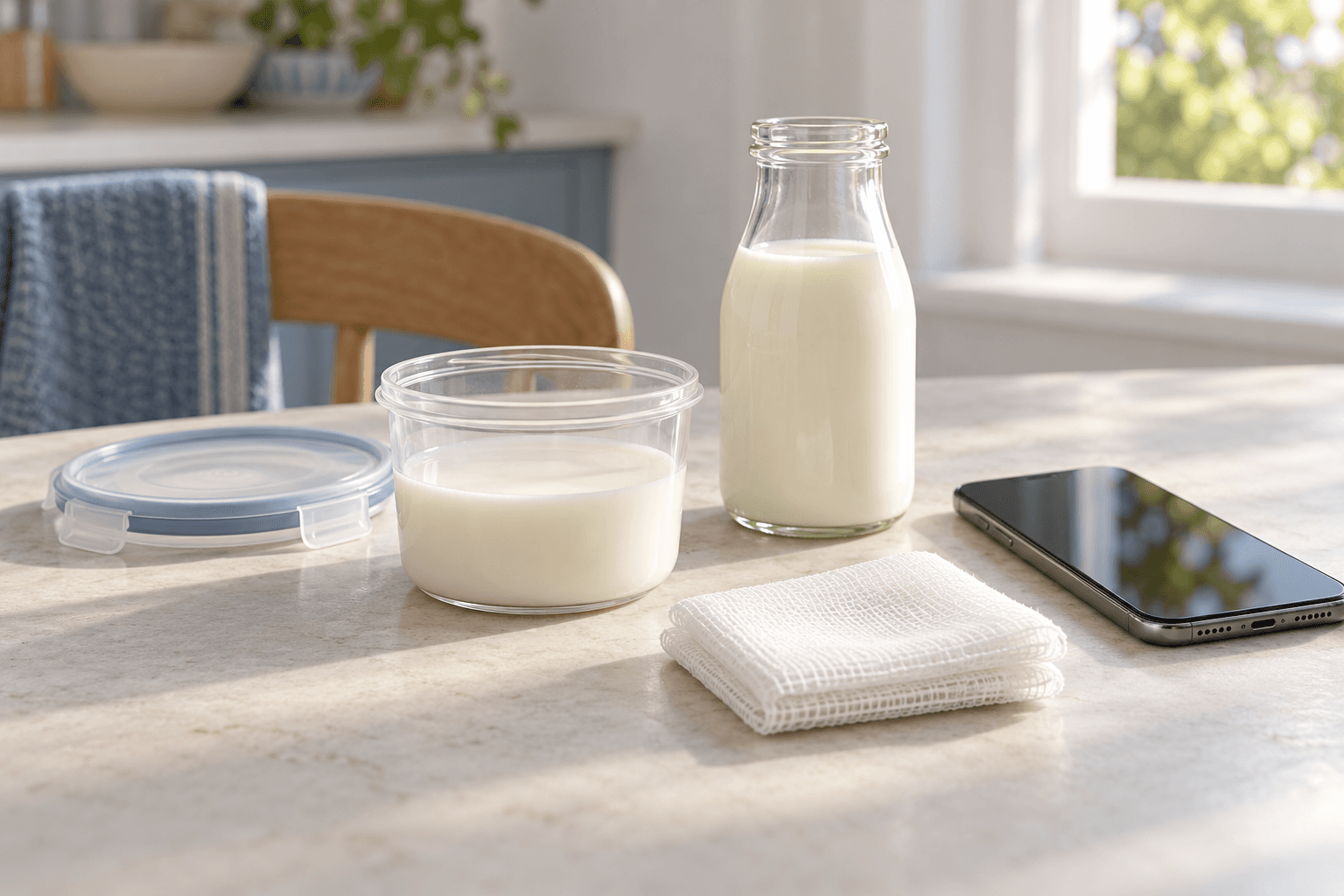
- If you cannot replant it safely, place it in a clean container of milk. If milk is unavailable, spit saliva into a container and keep the tooth in that while obtaining urgent help. Do not store a loose tooth in a child's mouth because it may be swallowed or inhaled.
- Take the child and tooth to emergency dental care immediately, including when you have successfully put the tooth back. Tell the dentist the time out of the mouth and how it was stored.
Do not try replantation if the child is unconscious, unable to cooperate or at risk of inhaling the tooth. Do not delay departure to find special equipment or a preferred brand of milk. The dentist still needs to examine the injury, stabilise the tooth if appropriate and plan follow-up. Replanting at the scene is first aid, not completed treatment.
Sources: First aid for a knocked-out tooth · Immediate care for an avulsed permanent tooth
If a milk tooth is knocked out or pushed out of position
Do not put a milk tooth back. The developing permanent tooth lies nearby, and the treatment approach differs. Contact a dentist promptly even if the child settles and the bleeding stops. The team needs to assess the gum, neighbouring teeth and whether the tooth is truly missing or has been pushed into the gum.
If you cannot find a tooth after an injury, tell the clinician. It may have been swallowed, inhaled, embedded in soft tissue or displaced into the tissues; a missing tooth is not always simply lost on the ground. Coughing or breathing difficulty after the injury needs urgent medical attention. Do not probe the wound or try to pull a tooth into place yourself.
Apply gentle pressure with clean gauze or a cloth for local bleeding if the child can tolerate it. Keep them supervised and avoid placing small loose materials in a young child's mouth. Ask the dental team for age-appropriate advice on comfort, cleaning and food while the injury is assessed.
Chipped, loose or displaced teeth also need assessment
A small chip may hide a more significant injury to the tooth or its support. Contact a dentist for a broken, loose or displaced tooth, a bite that suddenly feels different, or persistent pain after a blow. If you find a broken fragment, keep it moist in milk and take it with you; the dentist can assess whether it is useful for treatment.
Do not file a sharp edge, glue a fragment back or straighten a displaced tooth at home. If there is also a cut lip or cheek, mention missing fragments because a piece may be in the soft tissue. Avoid biting with the injured teeth until you receive advice. Pain relief should follow an age-appropriate product or clinician's instructions, not an adult dose improvised for a child.
Sources: First aid for a knocked-out tooth · Trauma guidance for primary and permanent teeth
Dental injuries: a quick first-aid guide
Never put a milk tooth back in. If you are unsure which type of tooth it is, keep it in milk and get immediate advice from a dentist.
For a knocked-out permanent tooth:
1. Hold the crown
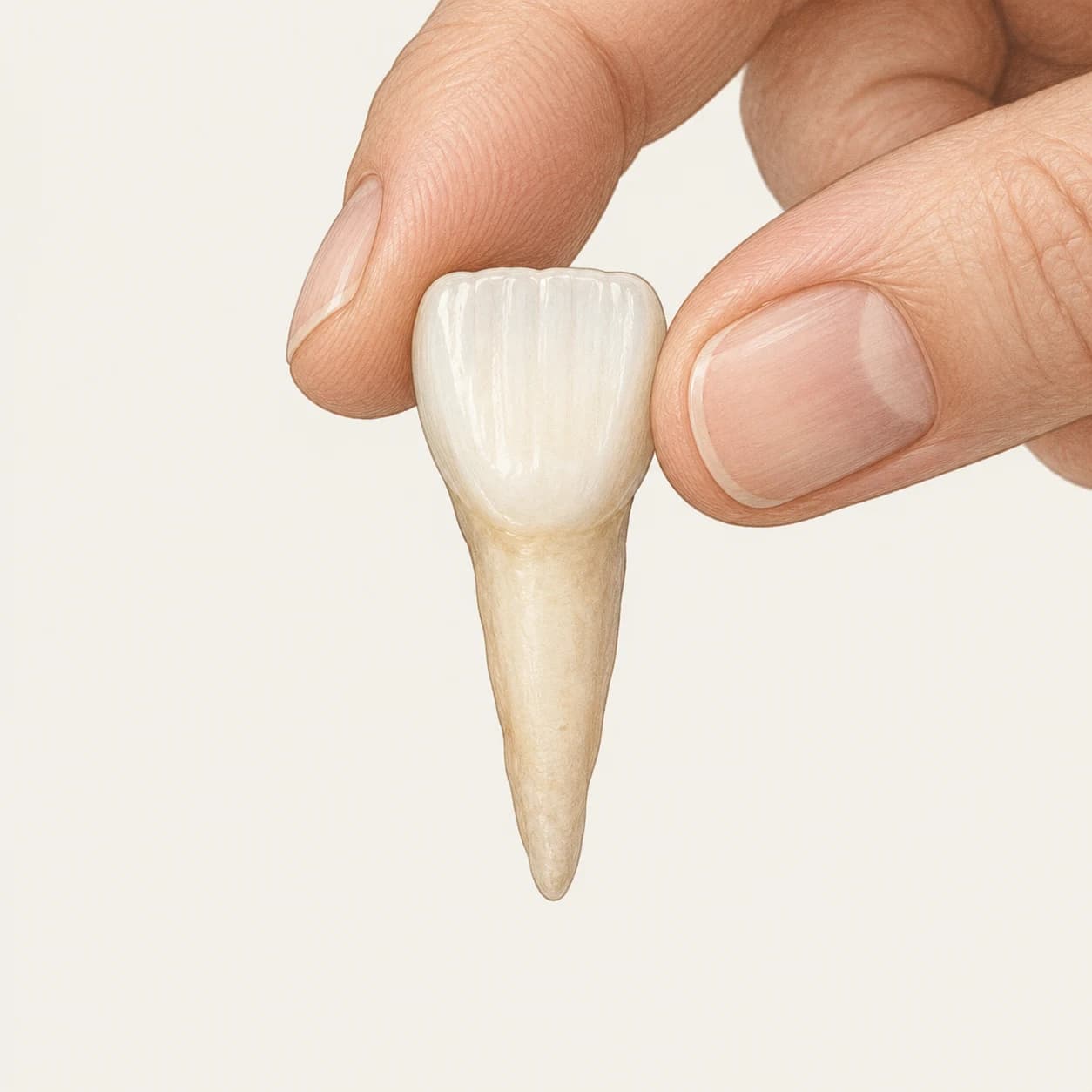
Pick up the tooth by the white part that was visible above the gum. Do not touch the root. If dirty, rinse it gently and briefly in milk or saline. Do not scrub it.
2. Put it back only if safe
If you are certain it is a permanent tooth and the child is conscious and cooperative, gently put it back in its socket. Do not force it. Have the child bite gently on a clean cloth. Do not try this if the child could swallow or breathe in the tooth.
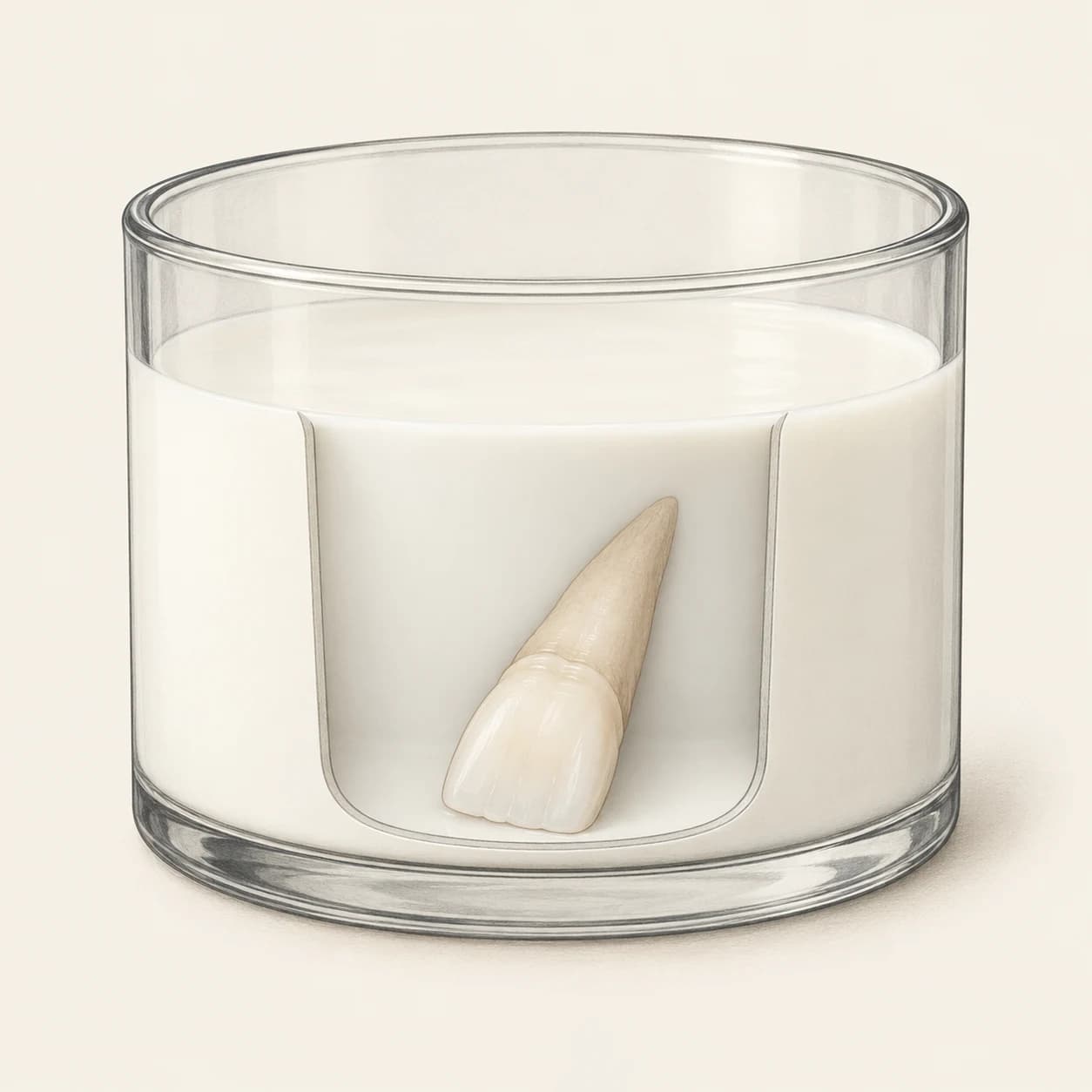
3. If you cannot put it back, use milk
Place the tooth in a clean container with enough milk to cover it. If milk is unavailable, use the child's saliva in a container. Keep it moist while travelling.
Do not carry a loose tooth inside a child's mouth.
The illustration is a cutaway so you can see the tooth beneath the milk.
Go to a dentist immediately, even if the tooth is back in place. Take the child and the tooth. Tell the dentist when the injury happened.
A broken tooth: keep any fragment in milk and take it to the dentist. Do not glue it back yourself.
If the child is unconscious, has trouble breathing or has severe bleeding that will not stop, call 112 first.
Illustrated guide based on IADT's Save a Tooth poster and the first-aid guidance below.
Sources: Immediate care for an avulsed permanent tooth · First aid for a knocked-out tooth · Trauma guidance for primary and permanent teeth
A tooth can need care after the pain settles
Keep the follow-up visits recommended by the dentist. Some problems become apparent later, and a child feeling comfortable does not prove the tooth has healed fully. Report swelling, a small spot on the gum, increasing looseness, persistent pain or a change in tooth colour. A colour change needs assessment, but does not by itself tell a parent which treatment is needed.
Write down the injury time, place, first aid and any advice received. Share the care plan with school and other caregivers, including any temporary activity or food restrictions. Ask exactly how to clean the area and when sport can resume. The plan depends on the injury and treatment, so another child's recovery instructions may not apply.
Make the next emergency easier to handle
Save your dentist's contact and ask in advance how to obtain urgent help outside opening hours. Coaches, teachers and caregivers should know that a permanent and a milk tooth are treated differently. A clean small container and access to milk can be useful, but a kit must not create a reason to delay calling or travelling.
For contact and collision sport, discuss a well-fitting mouthguard, especially during tooth changes or orthodontic treatment. Review fit as the mouth changes and replace a damaged guard. Protection lowers risk; it does not remove the need for assessment after a significant impact.
New permanent teeth in the school years
Looking after your teeth as a teenager
Sources: Sports mouthguards
Ask about keeping a 3D record of the teeth
At a routine visit, ask whether an optical intraoral scan would be useful for your child. We recommend keeping any scans and clinical photographs already taken, and asking how to obtain a usable copy if you change dentist. An optical scan creates a 3D digital impression of the tooth surfaces without X-rays.
A scan made before an injury may give the dentist a reference for the tooth's original shape when a broken piece is missing or cannot be reattached. It can help plan the shape of a restoration. A small laboratory study of crown designs found that designs copied from the original tooth scans matched that shape more closely and needed less design adjustment than the other methods tested. This supports the idea, but does not prove that routinely scanning every child improves treatment after an accident.
Our view: preserving an existing scan is worthwhile; paying for a new one solely as a precaution is an individual choice to discuss with the dentist. A scan cannot promise an easy or exact repair. The remaining tooth, the tissue inside it, its colour and the bite still need assessment. Without an earlier scan, the dentist can use the remaining and neighbouring teeth and other records to plan treatment.
Do not request a CBCT or panoramic X-ray simply to keep a backup of how the teeth look. These use ionising radiation and need a clinical reason. After an injury, do not delay urgent care to find old scans.
Sources: Optical intraoral scans: digital impressions · Copying original tooth shape: laboratory study · When dental X-rays and CBCT are justified
Sources
- First aid for a knocked-out tooth NHS · EN
- Emergency number 112 in the EU Your Europe · EN
- Sports mouthguards British Orthodontic Society · EN
- Optical intraoral scans: digital impressions American Dental Association · EN
- Copying original tooth shape: laboratory study Wang et al. · EN
- When dental X-rays and CBCT are justified American Dental Association · EN