- For parents and caregivers
Brushing together in the preschool years
Build a workable routine, respond to brushing difficulties and protect milk teeth while your child learns to take part.
Created Updated
Your child joins in; you finish the cleaning
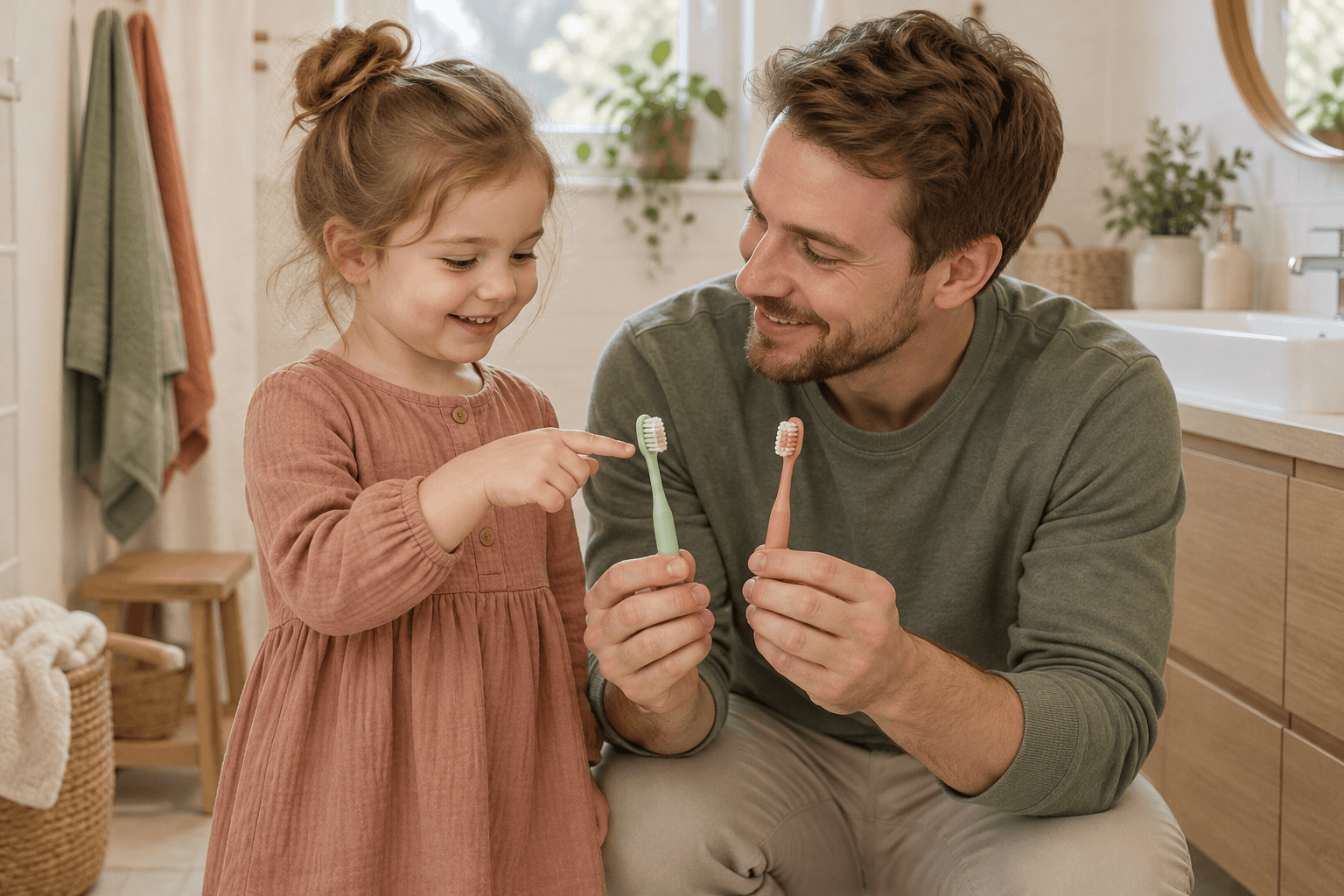
A preschooler may enjoy choosing a brush and copying your movements, while still missing the back teeth and the gumline. Holding a brush confidently is different from cleaning every surface. Keep an adult responsible for the final clean, twice daily, including before bed. Taking turns lets the child practise without making their developing coordination responsible for preventing decay.
Choose a position where you can see into the mouth and the child feels supported. You might stand behind them at a mirror or sit together. Explain what you are about to do and keep the same order each time. A rushed instruction to “brush properly” gives little help; naming the next area makes the task more understandable.
Milk teeth are still doing important work. Pain can interrupt sleep and eating, and a cavity may need treatment even if that tooth will eventually be replaced. A child who avoids chewing on one side, stops tolerating brushing or repeatedly wakes with discomfort needs an examination. Do not assume a preschooler will always identify the painful tooth accurately.
Choose by fluoride content and use a small amount
For this age group, the EAPD reference we use specifies a pea-sized amount of 1000 ppm fluoride toothpaste, twice daily. A dentist can advise a higher concentration according to risk. Put the paste on the brush yourself. A long ribbon, as shown in some advertising, is not the amount for a preschool child.
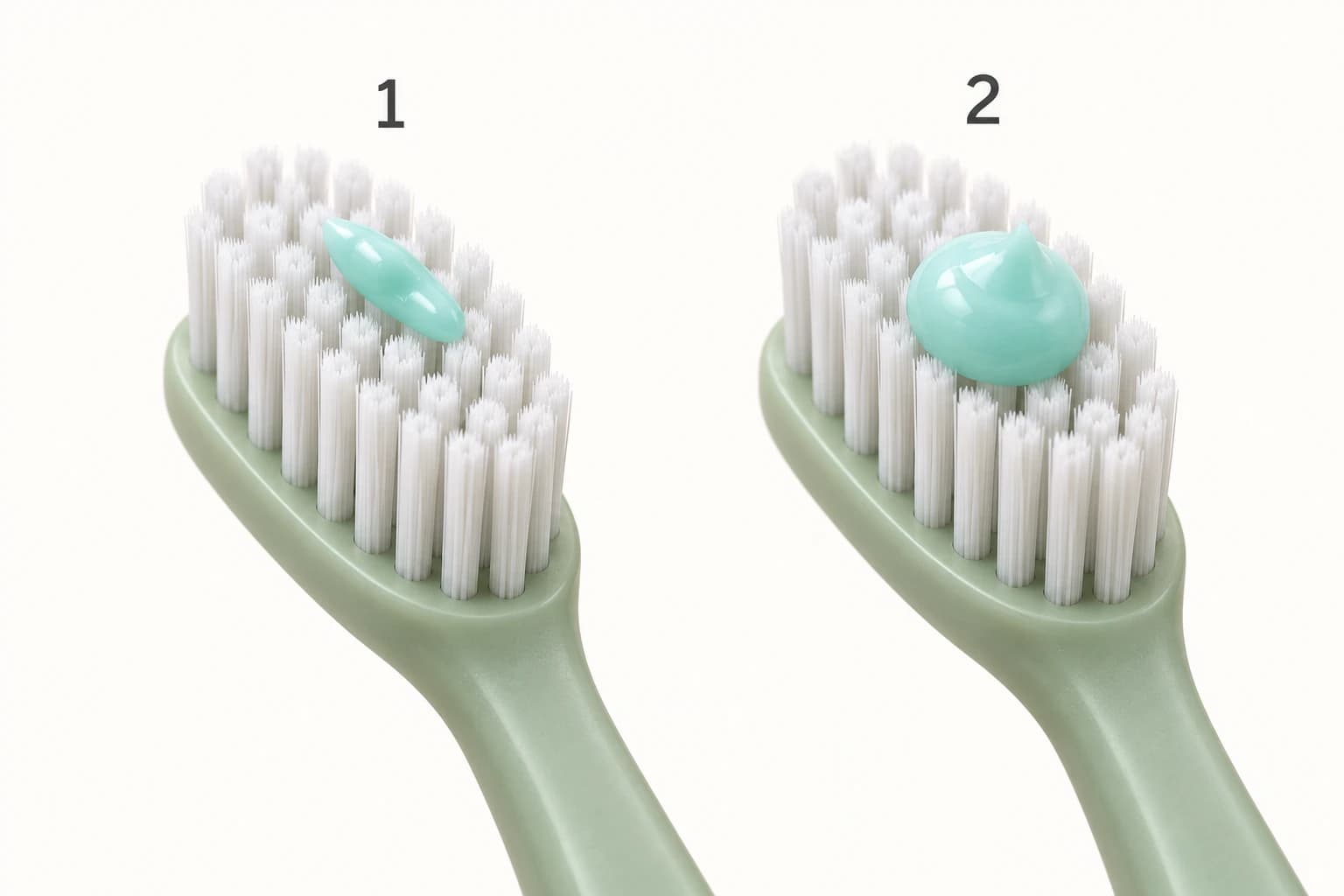
1: a rice-grain amount. 2: a pea-sized amount. Both brush heads are shown at the same scale. Use the age and concentration guidance above.
Check the fluoride concentration on the pack, rather than relying on a cartoon character, flavour or the word “natural”. Encourage your child to spit after brushing and avoid rinsing with water. If they still swallow much of the paste, tell the dentist so the routine can be checked. Do not replace effective toothpaste with a fluoride-free product just because it is marketed for young children.
Begin with the outside surfaces, then the inside, then the chewing surfaces, using gentle movements. Lift the lip enough to see where the upper front teeth meet the gums. A timer or song can help establish a habit, but it cannot tell you whether all teeth were reached. Ask the dental team to watch a demonstration if you are uncertain.
Work out why brushing is difficult
Refusal is information, not a diagnosis. Notice whether it happens only at bedtime, with a particular flavour, when the brush touches one area or whenever the child feels rushed. A sudden change after previously comfortable brushing can be a reason to look for pain. Persistent distress deserves professional support rather than a stronger grip or a more forceful brush.
Change one thing at a time. Try brushing before the child becomes overtired, reducing noise, using a small soft head or finding a tolerated fluoride toothpaste with less flavour or foam. Keep the child informed about what comes next. For sensory differences, the dental team can help build gradual steps and an individual plan. These adjustments are options to explore, not a guarantee that every child will accept the same method.
An achievable first step might be letting the brush touch the front teeth briefly while an adult names the next action. Continue building towards effective cleaning with professional support. Praise something specific, such as opening for the back teeth. Avoid comparing siblings, threatening a dental visit or describing treatment as a punishment for not brushing.
Make the daily pattern easier on teeth
Look at the whole day rather than singling out one food. Repeated sweet snacks and drinks give teeth frequent exposure to sugar. Offer water between meals and keep sweet foods, when offered, with a meal rather than turning them into a series of small rewards. Juice and smoothies still contain free sugars even when the pack says “no added sugar”.
For nursery or time with grandparents, agree on a simple shared routine: who helps with brushing, which paste is used and what the usual drink is. A workable handover is more useful than several adults each assuming someone else has done the evening clean. If your child has feeding difficulties, poor growth or a prescribed diet, make changes with their care team; oral-health advice should not remove needed nutrition.
Dummy and thumb habits need a calm plan
Ask about persistent dummy or thumb sucking at the dental appointment, especially as the child approaches or passes three. How long and how strongly the habit continues matters. The dentist can assess the bite and help choose a manageable approach. A pacifier labelled “orthodontic” does not remove the need to discuss prolonged use.
Choose a settled period to start changing a comfort habit. Agree on small steps, offer another calming routine and notice effort without criticism. A thumb cannot simply be put away like a dummy, so a child needs cooperation and support. Do not cut a dummy, tie hands, apply irritants or shame the child. A separate guide explains how to plan this conversation.
Keep visits practical and predictable
Tell the dentist about any sensory difficulty before the appointment, not only once the child is in the chair. Ask whether the first part can include meeting the team and seeing the mirror. Use straightforward language at home: the dentist will look at the teeth and explain what happens next. Avoid promising that every visit will be painless or that nothing will be done.
The next appointment should reflect the child's risk and findings, rather than a single interval for every family. Before leaving, agree who will help with brushing, any additional prevention and when to return. Seek earlier advice for pain, swelling, a broken tooth or a new change that worries you. Regular visits do not make symptoms something to wait out.
Sources
- Brushing technique and adult help SDCEP · EN
- Care for ages 2–12 Dental Health Foundation · EN
- European fluoride guidance EAPD · EN
- Oral care and sensory needs Birmingham Community Healthcare NHS · EN
- Dental anxiety SDCEP · EN
- Sugars and dental caries WHO · EN
- Policy on pacifiers AAPD · EN
- Individual recall planning SDCEP · EN
- Dental abscess and urgent signs NHS · EN