- For parents and caregivers
The first teeth: care from birth to age three
A practical start with brushing, teething, feeds and cups, including what to discuss at the first dental visit.
Created Updated

Before and after the first tooth
The first tooth changes the evening routine. Before it appears, a clean, damp soft cloth can gently wipe the gums and help your baby become familiar with having their mouth cared for. This is not a substitute for brushing once teeth arrive. There is no reason to scrub the gums, use toothpaste on a toothless mouth or try to remove a persistent white patch yourself; ask a clinician about a patch, soreness or feeding difficulty.
Milk teeth help a child eat and speak, and they hold space as the jaws develop. They can develop decay well before the child can describe pain. A baby who turns away from the brush may be tired or dislike the sensation, but repeated discomfort in the same place deserves attention. Waiting for a tooth to fall out is not a plan for treating pain or infection.
This guide covers birth until the third birthday. Tooth eruption varies, so use the teeth you can see, your child's abilities and your dentist's advice to guide care. An age range is a way to find relevant information, not a timetable every baby must meet.
A routine an adult can repeat
Begin brushing when the first tooth appears, twice a day, including last thing before sleep. Choose a small, soft brush and a position that supports the child's head and lets you see the tooth surfaces. A baby may be comfortable on your lap; an older toddler may prefer sitting with their back against you. Keep the movement gentle and pause if they become distressed.
Our toothpaste guide uses the European Academy of Paediatric Dentistry's 2019 reference: 1000 ppm fluoride with a rice-grain amount before age two, then a pea-sized amount from age two to six. An adult dispenses it and does the brushing. The dentist may recommend a different concentration after assessing decay risk. The pack's age picture alone does not tell you its fluoride concentration.
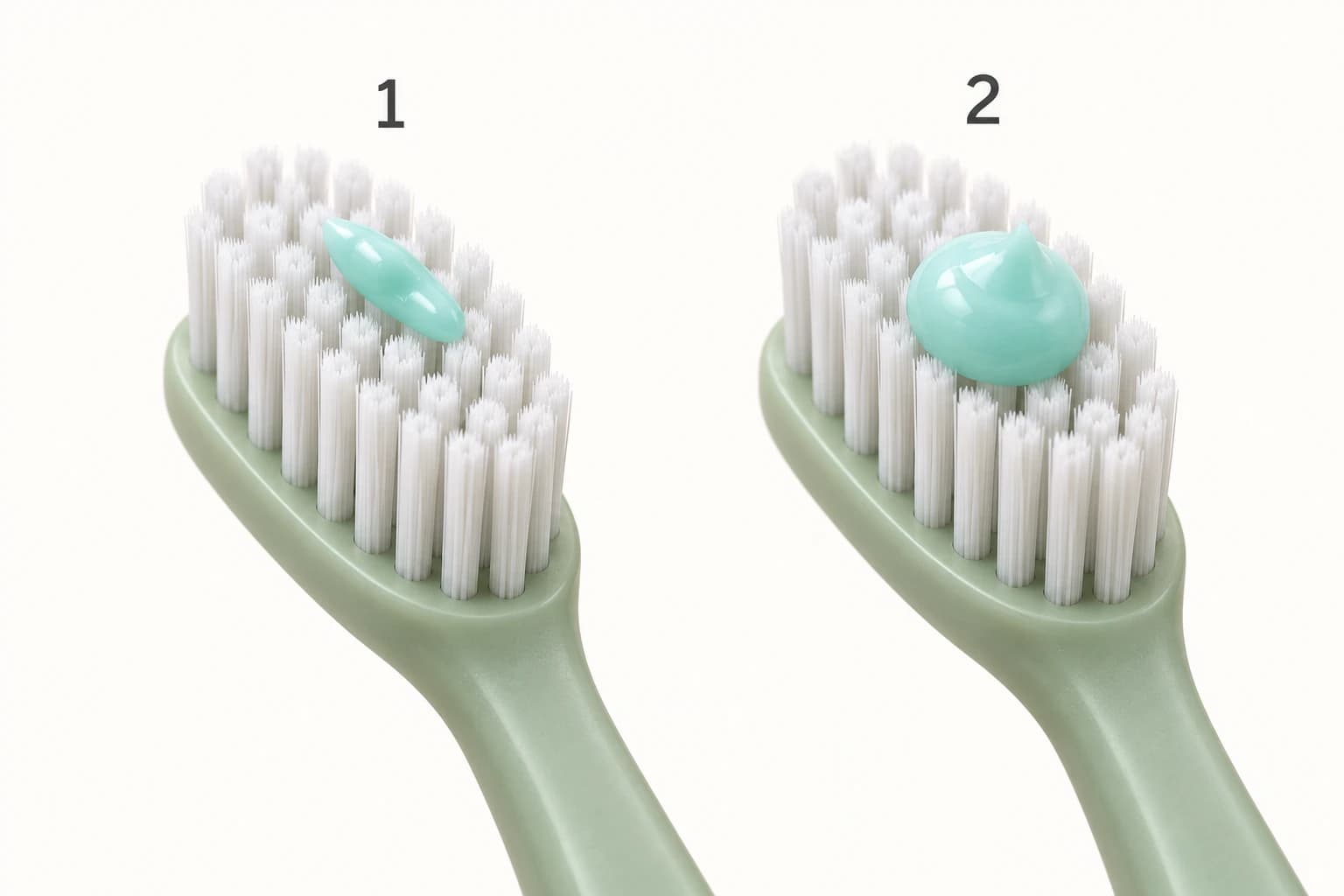
1: a rice-grain amount. 2: a pea-sized amount. Both brush heads are shown at the same scale. Use the age and concentration guidance above.
Work around the outside, inside and chewing surfaces of each tooth. With only a few teeth this takes less time than cleaning a complete mouth; the aim is careful coverage, not holding a distressed infant in place to complete a timer. Encourage spitting when the child can do it, without rinsing the toothpaste away. Keep the tube out of reach so brushing does not turn into eating toothpaste.
Comfort during teething, and signs of illness
Tender gums, more dribbling and a desire to chew can accompany eruption. Offer a clean teething ring cooled in the fridge, following its instructions, or gently massage the gum with a clean finger. Freezing a ring can make it too hard. Never tie a teething object around a child's neck. Amber necklaces add a strangulation and choking risk and are not a dental treatment.
A high temperature, diarrhoea, marked lethargy or a child who cannot drink should not simply be explained away as teething. Contact the child's medical clinician when they seem unwell. If pain relief is needed, ask a pharmacist or clinician about a product and dose suitable for the child's age and weight; this guide does not give a medication schedule. Adult oral gels and improvised remedies are not suitable substitutes.
Milk feeds, bottles and the move to a cup
Dental advice must fit a baby's nutrition. Breast milk or infant formula remains central in infancy, and water must not replace needed milk feeds. When complementary foods begin, offer small sips of water from an open or free-flow cup with meals, usually from around six months. Help the child learn rather than expecting a spill-free transition immediately.
Avoid putting juice, sweetened tea or other sugary drinks in a feeding bottle. Repeated sipping prolongs contact with sugar. Once teeth appear, discuss frequent night feeding together with brushing and the child's overall diet at the dental visit. A useful conversation considers growth, feeding difficulties and family circumstances; a blanket instruction to stop breastfeeding is not an individual care plan.
Practise the cup while the child is upright and supervised. Start with a small amount and a cup the adult can help steady. A valve-controlled cup that is carried and sipped from all day does not by itself change the pattern of repeated sweet-drink exposure. The drink and how often it is offered matter as well as the container.
Dummies, comfort and learning to cooperate
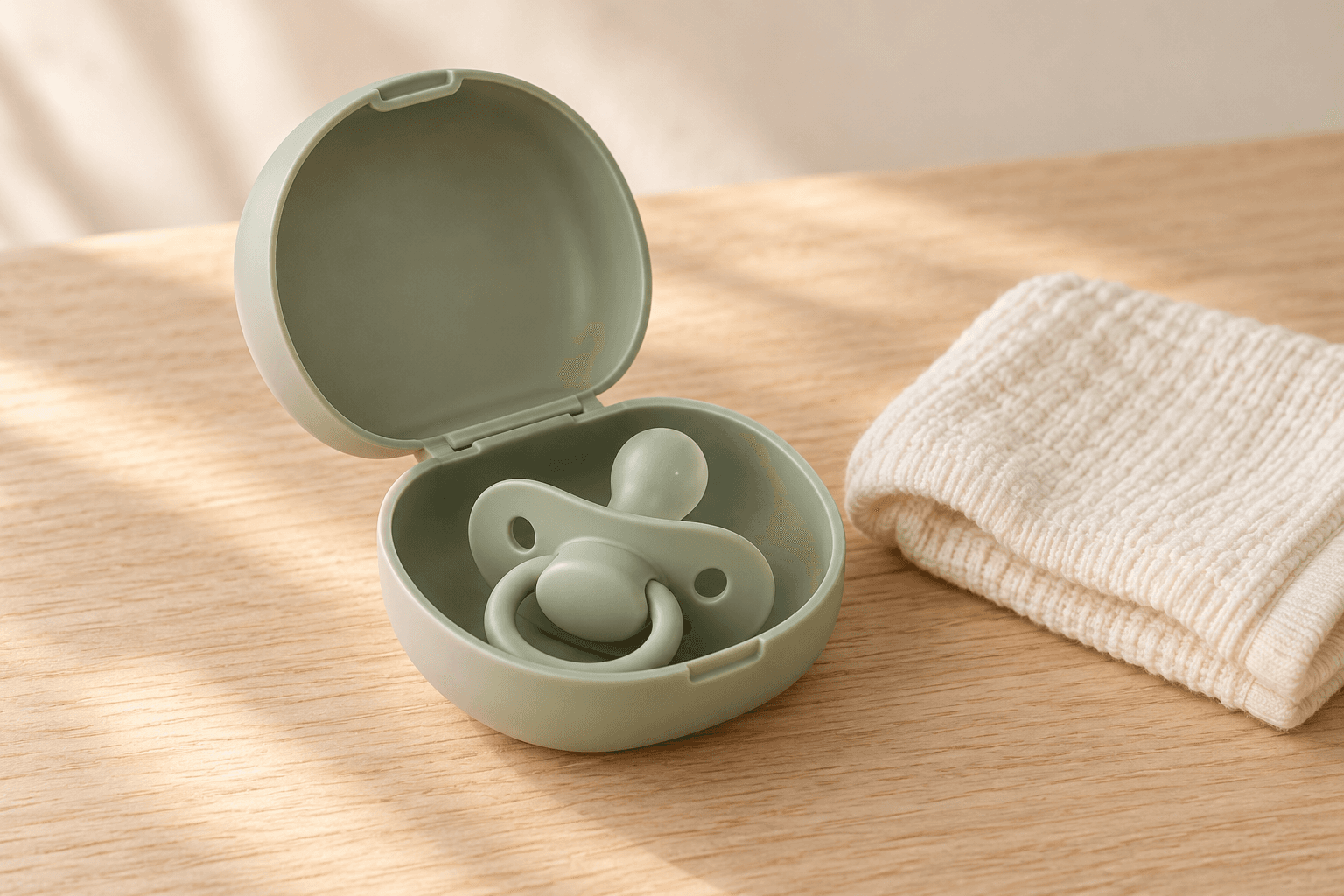
Sucking can be comforting in infancy. If a dummy is used, inspect it for wear, follow the manufacturer's cleaning instructions and never sweeten it with sugar or honey. Do not attach cords around the neck. As a child grows, discuss a gradual reduction in use; our separate guide explains how duration and the child's readiness affect this conversation.
For brushing, try a predictable sequence: show the brush, let the child touch it, then brush a small area. Offer a choice of two suitable brushes or the song you use. If the problem seems to be taste, foam or touch, tell the dental team exactly what happens. A child who consistently cannot tolerate brushing needs help adapting the routine, not blame.
The first appointment and when to call sooner
Arrange an initial dental visit with the first tooth and by the first birthday. Bring the toothpaste or a photo of its ingredients, and explain feeding and brushing as they actually happen. The appointment is an opportunity to check development and practise care before pain becomes the reason for attending. Ask how to contact the practice between appointments.
Contact a dentist promptly for a new chalky patch, a visible cavity, repeated pain or a tooth injured in a fall. Swelling, fever with dental pain or difficulty eating needs urgent assessment. Breathing or swallowing difficulty, or rapidly spreading swelling, is an emergency: call 112 in Bulgaria. A routine appointment weeks away is not the right response to these signs.
Sources
- Infant and early-childhood oral health AAPD · EN
- Questions about infant oral care Dental Health Foundation · EN
- Caring for gums before the first tooth · ADA American Dental Association · EN
- European fluoride guidance EAPD · EN
- Brushing technique and adult help SDCEP · EN
- Helping a teething baby NHS · EN
- Complementary feeding guidance WHO · EN
- Policy on pacifiers AAPD · EN
- Oral care and sensory needs Birmingham Community Healthcare NHS · EN
- Dental abscess and urgent signs NHS · EN
- Emergency number 112 in the EU Your Europe · EN