- For parents and caregivers
Dental sealants: which teeth, what happens and what to ask
Understand how sealants protect molar grooves, how they differ from varnish and fillings, and where Bulgaria's programme fits.
Created Updated
Protecting the grooves a brush struggles to reach
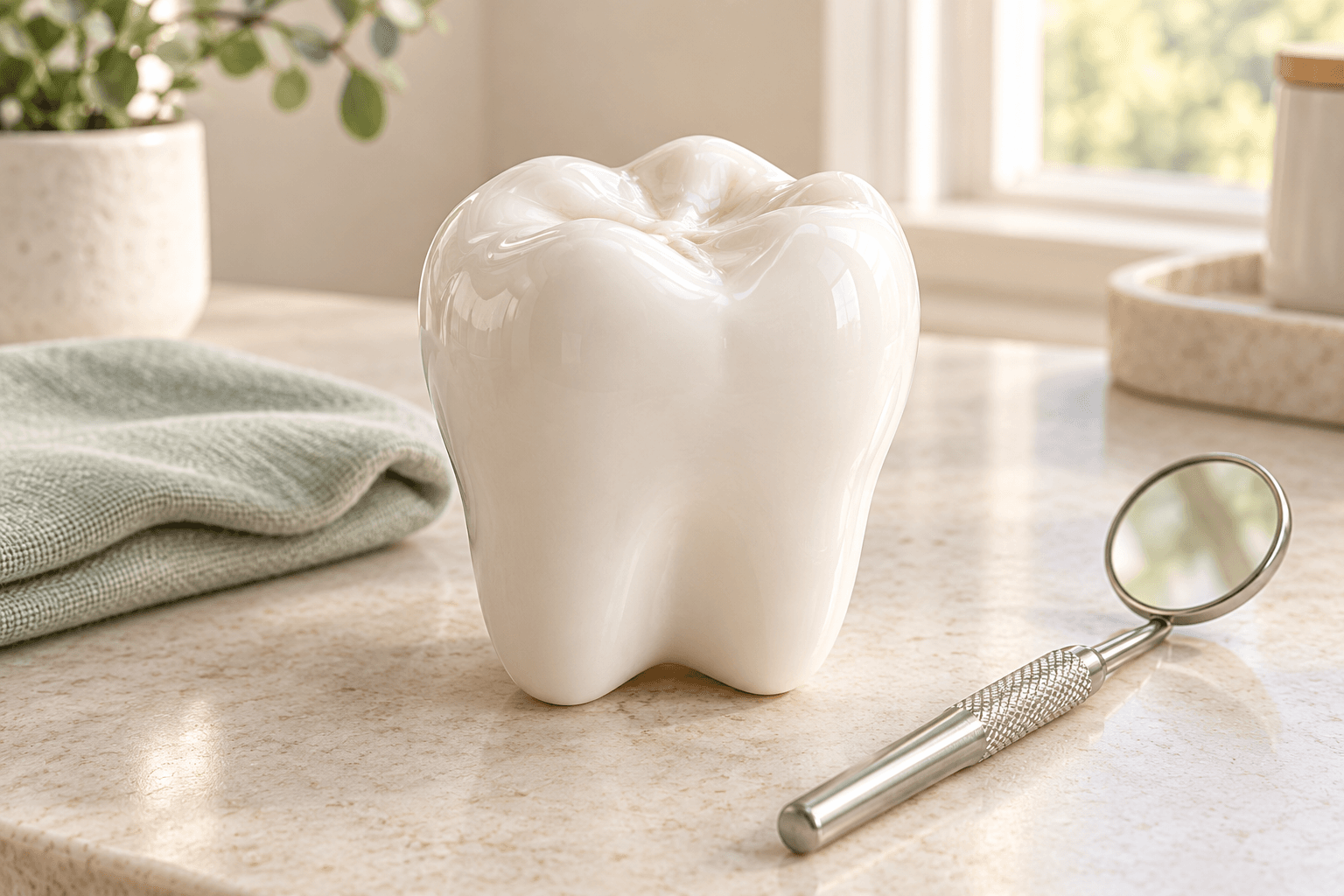
The chewing surfaces of back teeth have pits and grooves. Some are narrow enough to retain plaque and food even when a child is learning to brush carefully. A sealant is a thin protective material placed over selected grooves. It creates a barrier and a surface that is easier to keep clean, while the rest of the tooth still needs ordinary daily care.
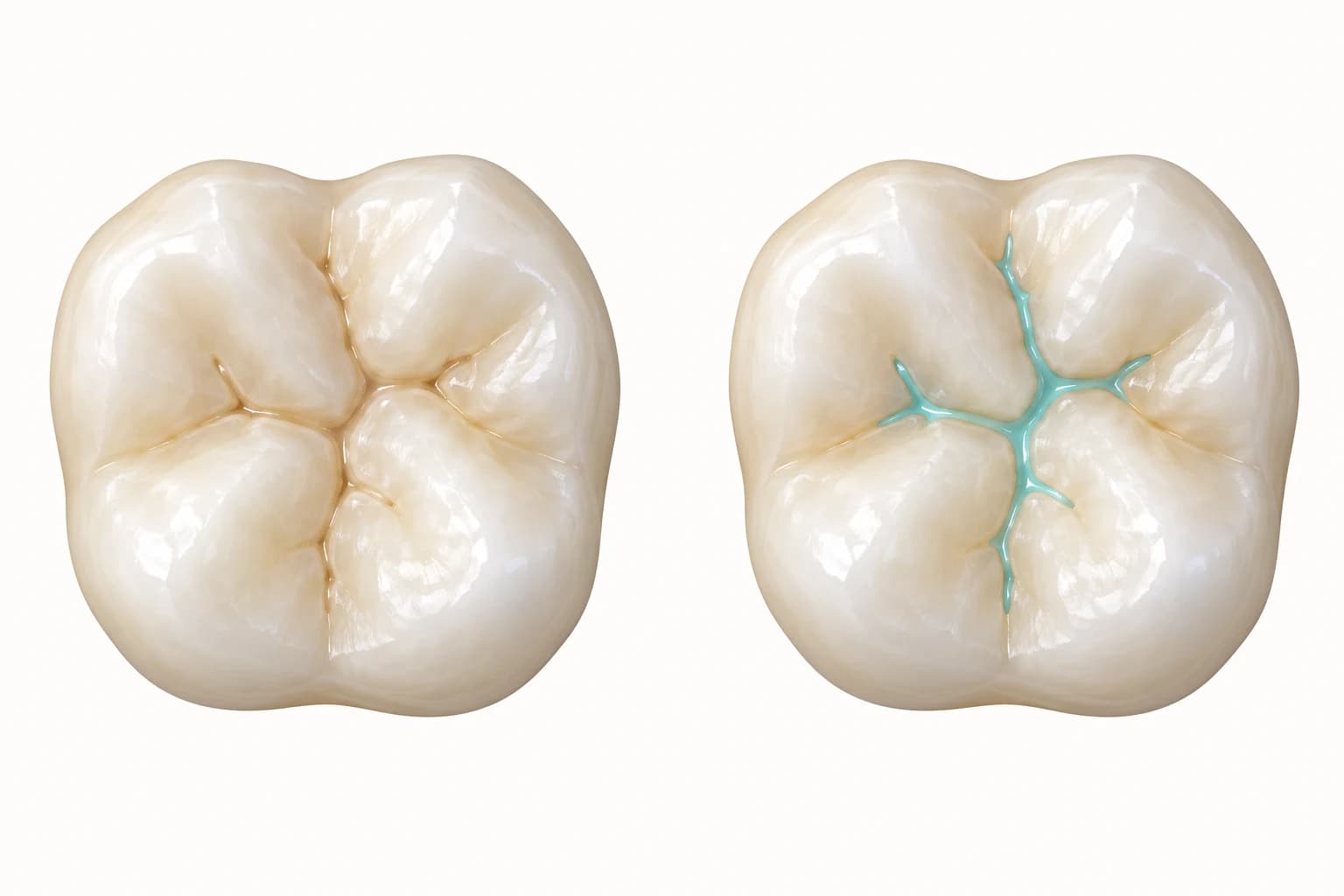
The left view shows the molar grooves. Turquoise on the right marks where the sealant sits. The colour is explanatory; a sealant does not cover the whole tooth.
The first permanent molars often appear around six to seven years, behind the milk teeth, without replacing one. They are easy for a family to mistake for another temporary tooth. Ask the dentist to identify them and assess their grooves. Second permanent molars arrive later, usually around twelve to thirteen, and may also need a preventive assessment.
Sealants are not a guarantee that a tooth will never develop decay. They do not protect every surface, and they can wear or become partly lost. Their value depends on choosing a suitable tooth, placing the material properly and checking it afterwards. Brushing with fluoride toothpaste and reducing frequent sugar exposure remain part of the plan.
The decision is about a tooth, not only an age
The dentist considers the groove pattern, eruption stage, existing decay and the child's overall risk. Being old enough for a campaign does not mean every molar needs the same procedure. Conversely, a tooth can need protection even if the child falls outside the age range of a particular funded programme.
Some early lesions without a cavity can be managed with a sealant as part of a monitored treatment plan. That does not mean sealing over any visible hole is appropriate. The tooth needs examination, and sometimes additional assessment, to decide whether prevention, sealing, a restoration or another approach is needed. Parents cannot make that distinction from colour alone.
Keeping the surface dry is important, particularly with resin sealants. A partly erupted molar may be difficult to isolate. The dentist may choose a different material, use another preventive measure temporarily or arrange a review as eruption progresses. Ask what the reason is, rather than treating a delay as evidence that protection is unnecessary.
Sealant, fluoride varnish and filling
These terms describe different jobs. Knowing the purpose makes it easier to understand a proposed plan and what should be checked at the next appointment. A child can receive more than one type of care because different teeth or surfaces have different needs.
- A sealant covers selected pits and fissures, usually on a chewing surface. It forms a barrier in a vulnerable area and needs retention checks.
- Fluoride varnish delivers fluoride to tooth surfaces as a preventive treatment. It does not physically fill deep grooves in the same way as a sealant.
- A filling restores a tooth when the dentist judges that a cavity or damage needs restorative treatment. It does not remove the need to control the factors causing decay.
If the dentist recommends a filling where you expected a sealant, ask them to show and explain the finding. If varnish is recommended as well as a sealant, ask which surfaces each treatment is intended to protect. The names should help you understand the plan, not serve as interchangeable promises of “protection”.
Fluoride varnish can be applied professionally to milk and permanent teeth. Applications are repeated according to the child's decay risk, so ask when the next one is due. Follow the team's instructions for eating, drinking and brushing afterwards, and mention known allergies or previous reactions. Varnish complements daily brushing with fluoride toothpaste.
What placement usually involves
The team cleans and checks the tooth, isolates it from moisture and prepares the surface according to the material being used. The sealant then flows into the selected grooves. Many resin materials are hardened with a dental light; other materials set differently. Finally, the dentist checks coverage and the bite. Routine sealing of a suitable sound surface usually does not require drilling.
Tell the team beforehand if your child struggles with keeping their mouth open, the suction sound or the sensation of isolation. They can explain the steps and adapt the appointment. Do not promise an exact duration or experience: eruption, cooperation and material choice can change how the visit is organised.
Afterwards, ask whether any eating or care instructions apply to the material used. If the bite feels persistently high or the child has pain, contact the practice rather than assuming it is a normal consequence of prevention. A written record of which teeth were sealed helps another dentist know what to review.
Protection needs checking
At subsequent visits the dentist checks whether the sealant is still covering the intended area and whether repair or replacement is needed. There is no single guaranteed lifespan for every material and tooth. A partly missing sealant may not hurt, which is one reason to keep the agreed check-ups.
Continue cleaning all tooth surfaces, including the gumline and between teeth as advised. A sealant on top of a molar does not protect the contact with the neighbouring tooth. If brushing remains difficult, ask for help reaching the area; the presence of a sealant is not a reason to leave it out of the routine.
The current Bulgarian programme and access
Bulgaria's current National Programme for Prevention of Oral Diseases in Children aged 0–18 covers 2026–2030. Its working programme describes sealing first permanent molars in children aged five to nine. This describes a programme target; it does not confirm that a campaign is open today, that every practice participates or that a particular child meets the clinical criteria.
Before arranging a visit, check the programme's current announcements and ask a participating practice about ages, dates, consent, required documents and which teeth can be treated. Clarify whether the appointment is under the programme or a separate paid service. Do not assume that NHIF treatment entitlements and a national prevention campaign are the same funding route.
The programme information was checked on 19 October 2026. Older online programme PDFs, including the document covering 2015–2020, remain historical sources even when uploaded later. Statistics from those documents describe their original period and should not be read as current measurements of children's dental health.
Sources
- Clinical sealant guideline AAPD / ADA · EN
- Sealants for families NIDCR · EN
- Tooth eruption charts American Dental Association · EN
- European fluoride guidance EAPD · EN
- Fluoride varnish and professional prevention SDCEP · EN
- Brushing technique and adult help SDCEP · EN
- National programme 2026–2030 Министерски съвет · BG
- Bulgarian working programme 2026–2030 Министерство на здравеопазването · BG